
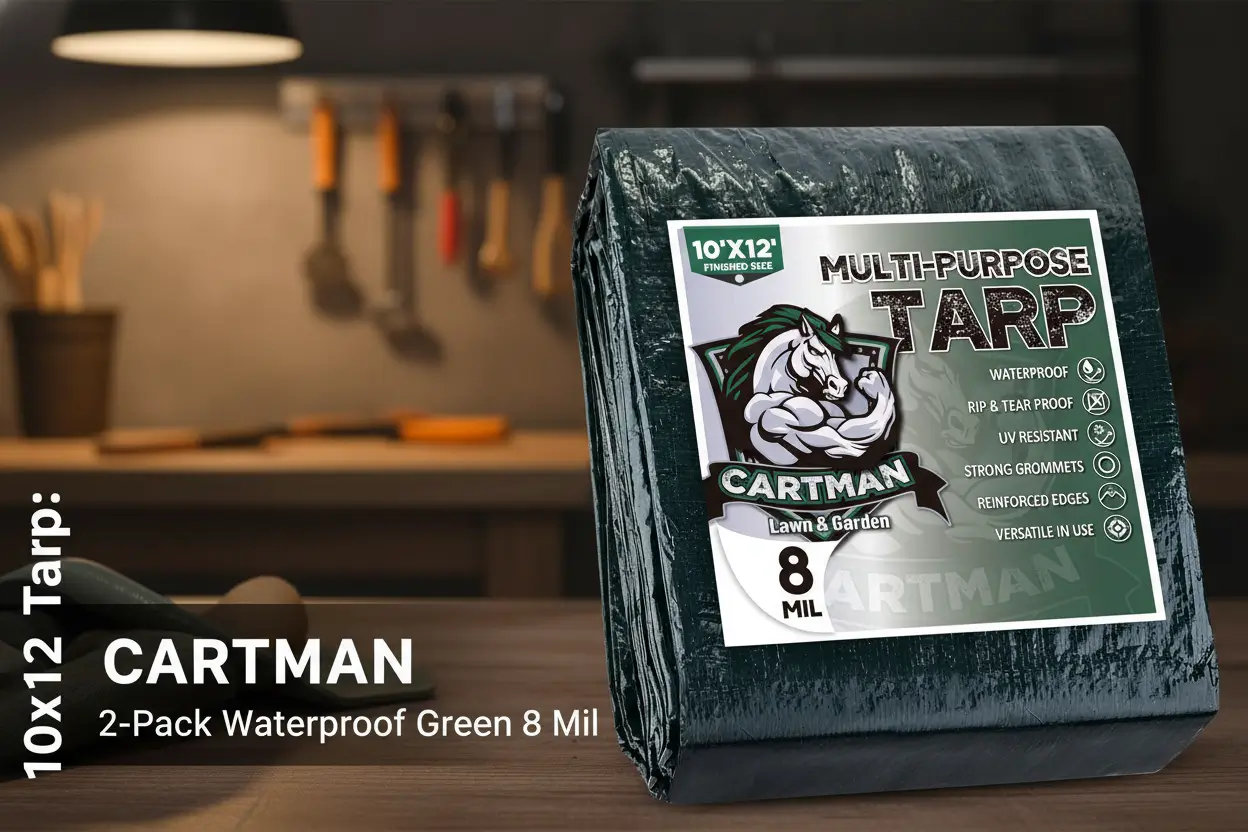

Mistake-first: most people grab the cheapest sheet and call it a shelter, then wonder why it tears after one storm. The 10×12 tarp you’re reading about is sold as a finished-size, so you actually get a true 10 x 12 feet cover — not a cut-that-shrinks surprise. With a 2-pack and 8 mil thickness, it’s built to replace that flimsy tarp in your kit.
Whether you need an emergency rain shelter, a camping groundsheet, or a gear cover, exact finished size matters for clean tie-downs and predictable coverage. Ready to stop reinstalling tarps during the first gust?
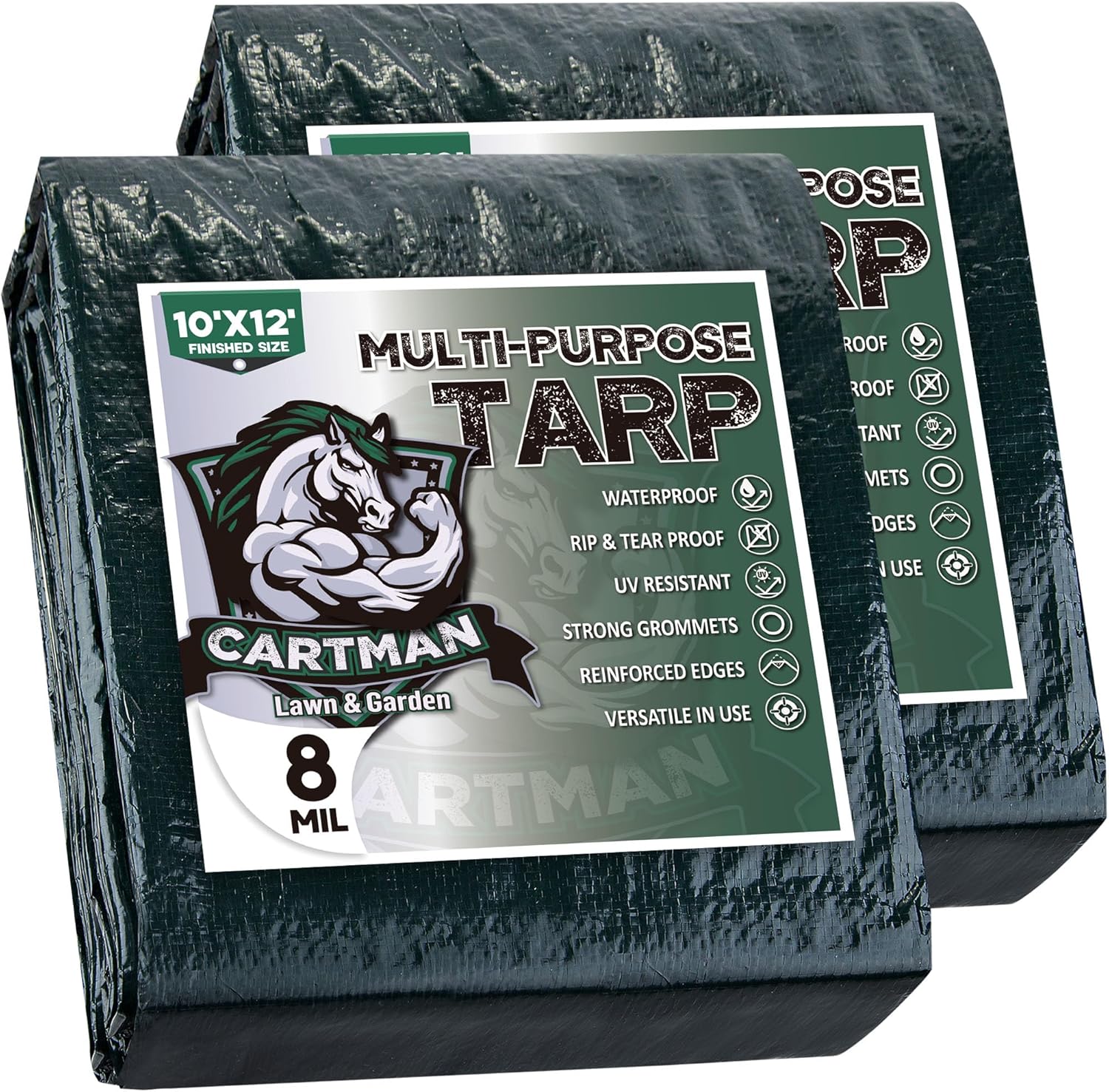
Key Features & Real-World Use
- Finished size accuracy – The marked size is the exact finished size, so you get predictable coverage for vehicles, firewood stacks, or shelter frames.
- 8 mil thickness – Heavier than thin polyethylene sheets; offers better tear resistance and durability for repeated use.
- Waterproof protection – Keeps gear and people dry in rain; useful as an emergency rain shelter or groundsheet under tents.
- Multipurpose form factor – Works as a tarp cover, awning, camping shelter, or temporary canopy for backyard projects.
- Easy maintenance – Shake off debris, air-dry, fold and store in a dry bag; works with rope, paracord, bungee cords, and tarp clips.
Practical materials and reinforced hem concepts are implied by the finished sizing and heavier 8 mil build, which makes it suitable for repeated outdoor use and storage in a garage or pack. Use it with grommets, stakes, or a ridgeline to create a secure rain fly or protective groundsheet.

How to Choose
Match the tarp to the job by weighing these criteria:
- Size accuracy – If you need coverage for an ATV, wood pile, or tent footprint, choose a finished-size tarp so you know what you get.
- Thickness vs packability – 8 mil is a middle ground: tougher than disposable sheets but still foldable for storage.
- Attachment options – Look for reinforced corners and grommet compatibility so you can use paracord, bungee cords, or tarp clips safely.
- Multipurpose needs – If you want groundsheet, canopy, and gear cover all in one, pick a neutral color and durable material like this green poly tarp.
Trade-offs: thicker tarps handle abrasion and wind better but add bulk. A 2-pack gives spares for separate tasks or a backup in emergency kits.

Quick Setup & Use
- Unfold the tarp and lay it face down so the printed finished-size is visible — confirms you have true 10×12 coverage.
- Plan anchor points: locate grommets or corners and run paracord or bungee to stakes, tree wraps, or vehicle loops.
- Create a ridgeline for an awning or pitch the tarp low for rain shedding; tighten tension to prevent flapping.
- Use as a groundsheet by staking corners and trimming edges away from open flames or hot coals for safety.
- After use, rinse, air-dry fully, fold neatly and store in a cool, dry space to avoid mildew and prolong life.
Buyer Doubts Solved
“Is 8 mil thick enough?” Yes — 8 mil offers a robust balance for camping, roofing coverups, and emergency use without excessive weight in a pack.
“Will it fit my gear?” The finished-size labeling means you can measure your gear or vehicle first and pick this 10×12 tarp with confidence.
“What about durability?” Expect better tear resistance than thin disposable tarps; reinforce high-stress points with extra cord or clips when needed.
“Is green a good color?” Green blends with campsites, hides dirt for longer, and works well as a camouflage canopy or neutral groundsheet.
“How do I secure it in wind?” Use multiple tie-downs, a ridgeline, and quality stakes. Pair with bungee cords or tarp clips for flexible tension and longer life.

Swap the flimsy sheet in your trunk for this finished-size 10×12 tarp 2-pack and you get predictable coverage, waterproof protection, and a spare for multi-tasking. It’s a small upgrade that pays off the first rainy outing.
Some links are affiliate. As an Amazon Associate, I earn from qualifying purchases — at no extra cost to you. It helps keep these finds coming. Thanks for your support!