
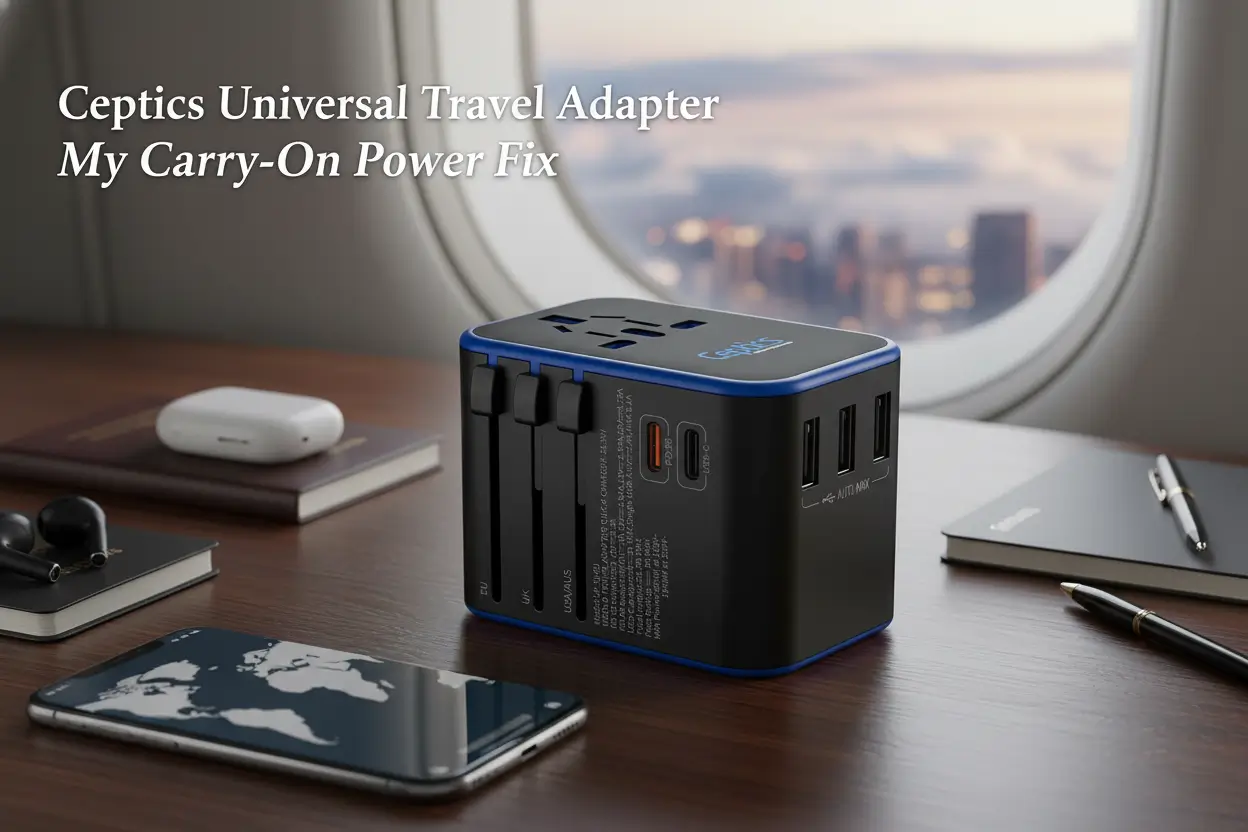

I learned the hard way on day two of a backpacking loop when I realized my phone, camera, and laptop couldn’t all charge at once. That’s when I started carrying the Ceptics Universal Travel Adapter everywhere I go. It handles 110V to 220V, has about 35W of output, and frees up space in my bag so I stop juggling cables during layovers.
I remember sitting on a hostel bunk with three devices and zero outlets. Plugging everything into this compact adapter saved me a frantic search for a café with power. If you travel with more than one device, do you really want to be that person fighting for the last working outlet?

Why This Earned a Spot in My Bag
For me, the Ceptics adapter isn’t a novelty — it’s a workhorse. I pack light: a carry-on backpack, a small daypack, and a handful of cables. On multi-city trips, flights, hostels, and road trips, I need an adapter that is durable, TSA-friendly, and doesn’t add bulk. This one fits in a side pocket, slides into hostel lockers easily, and lives in my tech pouch when I’m not using it.
If you travel with a phone, a camera, and a laptop or tablet, this adapter covers you. It supports Type I, C, G, and A outlets, so I can plug in across Europe, the UK, Australia, and the US without carrying three separate plugs. For digital nomads hopping between co-working spaces and cafes, that kind of simplicity is a relief.
What Sold Me On It
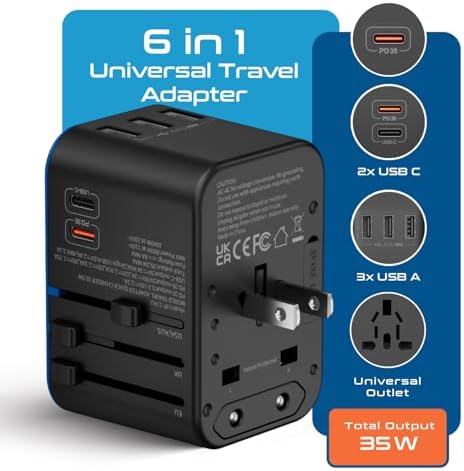
- Real charging power: Dual USB-C ports with PD and a QC 3.0 port let me fast-charge a phone and tablet while powering a laptop on the side. The unit advertises around 35W total output — enough to keep a laptop boostable and phones topped up quickly.
- Multiple ports: Two USB-C ports plus 3 USB ports reduce the number of adapters and bulky chargers I carry. I can charge 3 to 4 devices at once without hunting for a power strip.
- Global compatibility: Works across 110V and 220V — I’ve used it in Rome, London, and a remote guesthouse in Bali without fuss. The built-in plug types (I, C, G, A) mean I rarely need a second adaptor.
- Packability and weight: Compact and lightweight enough to fit in a small electronics pocket. It doesn’t add bulk to my backpack or my checked luggage maintenance routine.
- Safety and maintenance: Good build quality, solid materials, and a snug fit in hotel outlets. I treat it gently and clean contacts if dust builds up in hostel sockets.
How I’d Choose Between Similar Options
When I’m comparing travel adapters, I run a quick checklist in my head. These criteria help me trade off features vs bulk:
- Port count vs size. If I’m on a long trip with many devices, I prefer more ports even if the adapter is slightly heavier. For weekend trips, smaller is better.
- Fast-charging support. USB-C PD and QC 3.0 matter if you value quick top-ups. Cheap multicountry plugs without PD mean slower charging and more time tethered to the wall.
- Voltage range. Must cover 110V to 220V — that keeps me safe in both the US and most of Europe/Asia.
- Durability and feel. I press connectors, wiggle the plug, and check the finish. A tight fit in outlets and rugged plastics predict longer life in backpacks and suitcases.
- TSA and carry-on friendliness. If it fits in a small pouch and doesn’t have loose parts, I’m less likely to forget it in a bin or lose it in transit.

How I Actually Use It Day to Day
- Before I pack, I tuck the adapter into my tech pouch with one USB-C cable and a short USB-A cable. That keeps it ready for airport lounges or overnight trains.
- At a hostel or café, I plug the adapter into the wall and plug my phone and laptop into the USB-C ports — PD handles the laptop charge while QC spins up my phone fast.
- On long layovers, I power three devices simultaneously and set a timer to rotate devices every hour so no battery drops below 40%.
- If an outlet feels loose or the plug wobbles, I switch to a different socket. The build quality usually means a snug connection, but old European sockets can be finicky.
- Maintenance: I wipe contacts with a dry cloth and keep it in a little zip pouch to avoid scratches and dust in hostel lockers.
If You’re Hesitating, Read This
- Is it bulky? I worried about extra weight, too. In practice it’s compact enough for a carry-on electronics pocket — worth the trade for fewer chargers and cables.
- Will it handle my laptop? With the PD ports and roughly 35W total, expect solid phone and tablet charging and occasional laptop boosts. For heavy laptop work I still carry a dedicated charger, but this adapter keeps me moving between meetings and planes.
- Are all plug types stable? Outlet fit varies by country — I’ve found the adapter fits snugly in most hotel walls. In older sockets you may need to hold it while charging; that’s a socket issue, not the adapter.
- Is it safe? I watch for heat with any multi-port charger. In my experience this adapter stays cool under normal use. I unplug when I leave devices unattended for long hotel nights.
- Do I really need one? If you travel with one device, maybe not. But if you travel with 2+ devices or swap between regions, this saves space, reduces cable tangle, and keeps your gear charged when you need it.

I pack this adapter on almost every trip now because it reduces gear, simplifies charging, and fits in my carry-on without fuss. It’s a smart pick if you value packability, charging speed, and reliability across multiple countries and hotel types.
Some links are affiliate. As an Amazon Associate, I earn from qualifying purchases – at no extra cost to you. It helps keep these finds coming. Thanks for your support!