


The delta clarifi under sink reverse osmosis system promises to remove more than 90 contaminants from your tap water using a compact, tankless design. In real homes that means fewer microplastics, PFAS, lead, arsenic, chlorine and unwanted pharmaceuticals at the kitchen faucet within days of installation. That level of coverage usually costs cabinet space or a plumbing pro – but what if you could get NSF-certified RO performance and save over 60% of under-sink room too?
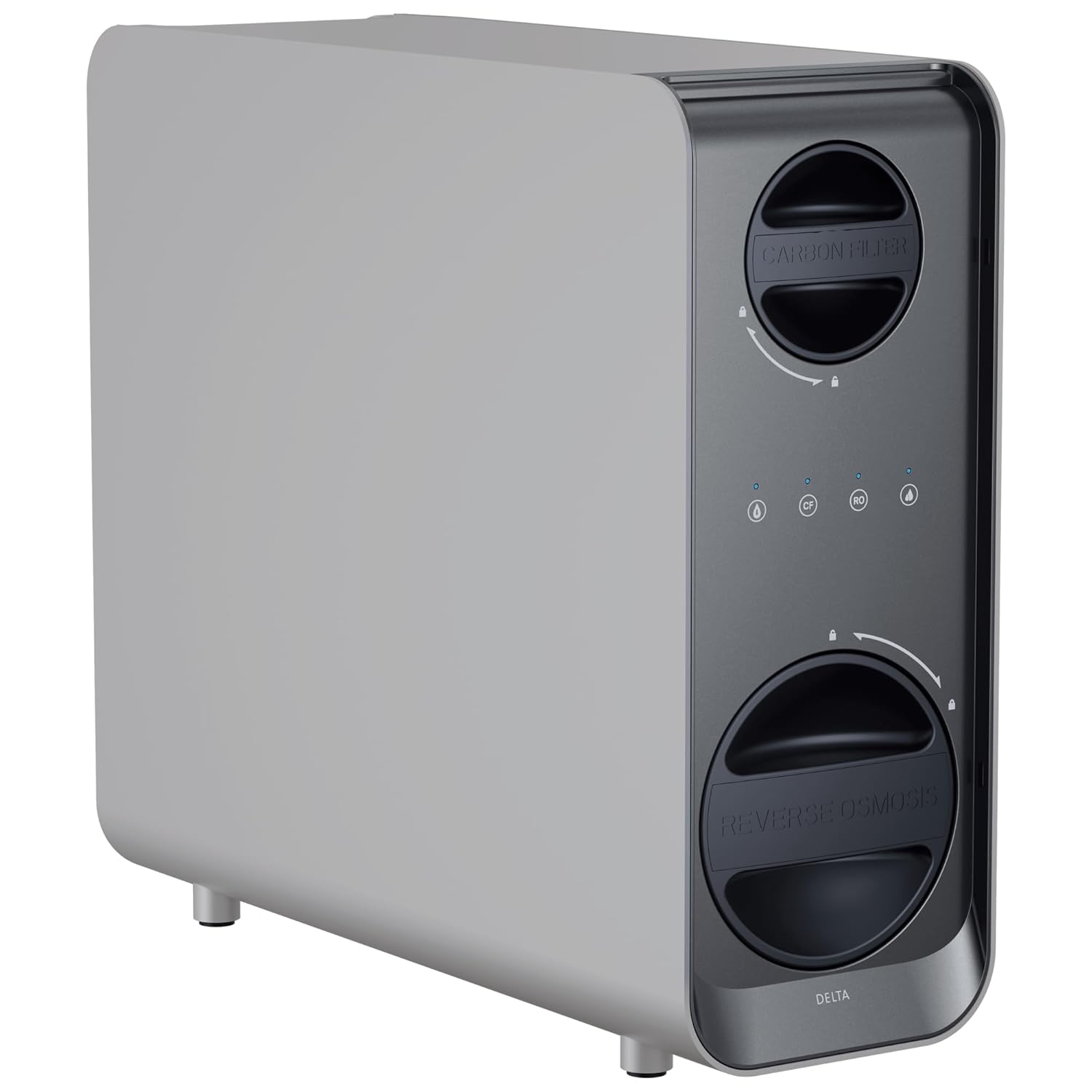
What Stands Out in Daily Use
- 6-stage filtration – multi-media RO stack that targets chlorine, chloramine, PFAS, microplastics, heavy metals, nitrates and common pharmaceuticals for cleaner tasting water.
- Tankless, slim form factor – at about 6-1/4 inches wide it frees up under-sink storage compared with bulky storage tanks and fits tight cabinetry.
- NSF & ASSE certifications – tested to NSF-58, 42, 53, 401 and 372 standards plus ASSE 1086 for safe performance and materials.
- Carbon + RO + optional remineralizer – activated carbon reduces chlorine and VOCs; RO membrane cuts TDS; optional remineralizer adds balanced minerals back for taste.
- DIY-friendly maintenance – filters and remineralizer switch in under a minute; replacement cadence is about every 2 years for primary cartridges, simplifying upkeep.

How to Choose – Key Criteria
Pick the right under-sink RO by weighing these trade-offs.
- Space vs capacity: Tankless systems like this favor cabinet room and steady flow, while tanked RO holds reserve water for peak demand.
- Certifications: NSF-58 and related approvals mean actual contaminant reduction for lead, arsenic, PFAS and more; avoid models without testing.
- Filter life and cost: Longer-lived carbon and RO cartridges reduce hassle; check replacement availability and whether a remineralizer is optional.
- Installation needs: If you want a DIY install, look for clear tubing/fittings, a compact footprint, and live customer support.

Quick Setup & Use
- Shut off the cold water supply and clear the cabinet area under the sink.
- Mount the slim RO unit using the included bracket and connect the inlet tubing to the cold water line with the provided fittings.
- Attach the dedicated drinking-water faucet or route to an existing prep faucet per instructions.
- Install the carbon and RO cartridges and optional remineralizer; hand-snap connections make swaps easy.
- Turn water on, check for leaks at tubing and fittings, then flush per manual before drinking.
Hesitations, Answered
“Is tankless as reliable as tanked?” Yes. Tankless RO delivers continuous flow and avoids the storage-tank odor risks; it simply uses a compact membrane and efficient plumbing to maintain pressure.
“Are replacement parts easy to find?” Delta supports filter availability and the cartridges swap quickly in under a minute, lowering long-term maintenance friction.
“What about installation difficulty?” If you can use common household tools and follow step-by-step guides, DIY installation is straightforward; live customer support is available for tricky cases.
“Will it remove PFAS, microplastics and lead?” The system is certified to reduce a broad suite of contaminants, including PFAS and lead, thanks to multi-stage filtration and a high-quality RO membrane.
“Concerned about taste or mineral loss?” Use the optional remineralizer cartridge to restore balanced minerals for better flavor and mouthfeel.
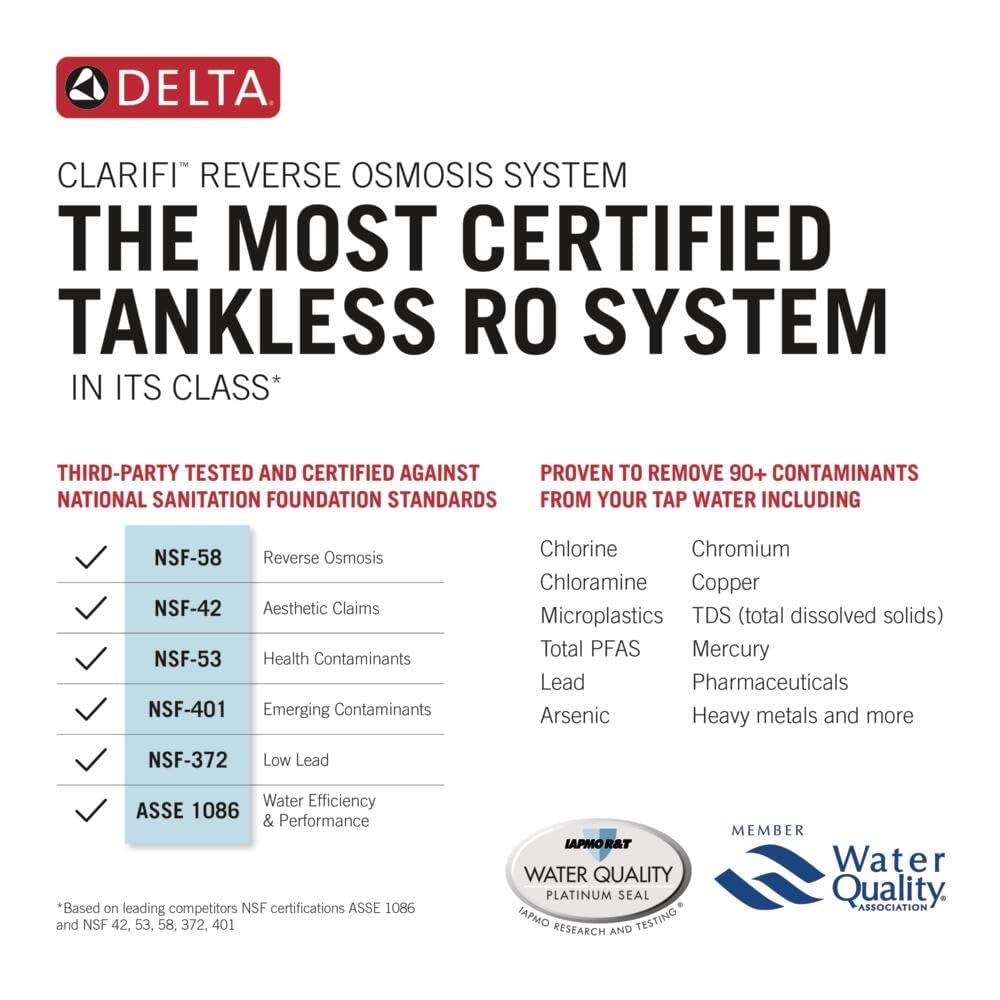
For families that want certified contaminant reduction, simpler maintenance, and more usable under-sink storage, the tankless design and practical filter life make this Delta unit a smart upgrade. If you want clear-tasting, lower-TDS water without a bulky tank in the cabinet, this model delivers the benefits now.
Some links are affiliate. As an Amazon Associate, I earn from qualifying purchases — at no extra cost to you. It helps keep these finds coming. Thanks for your support!