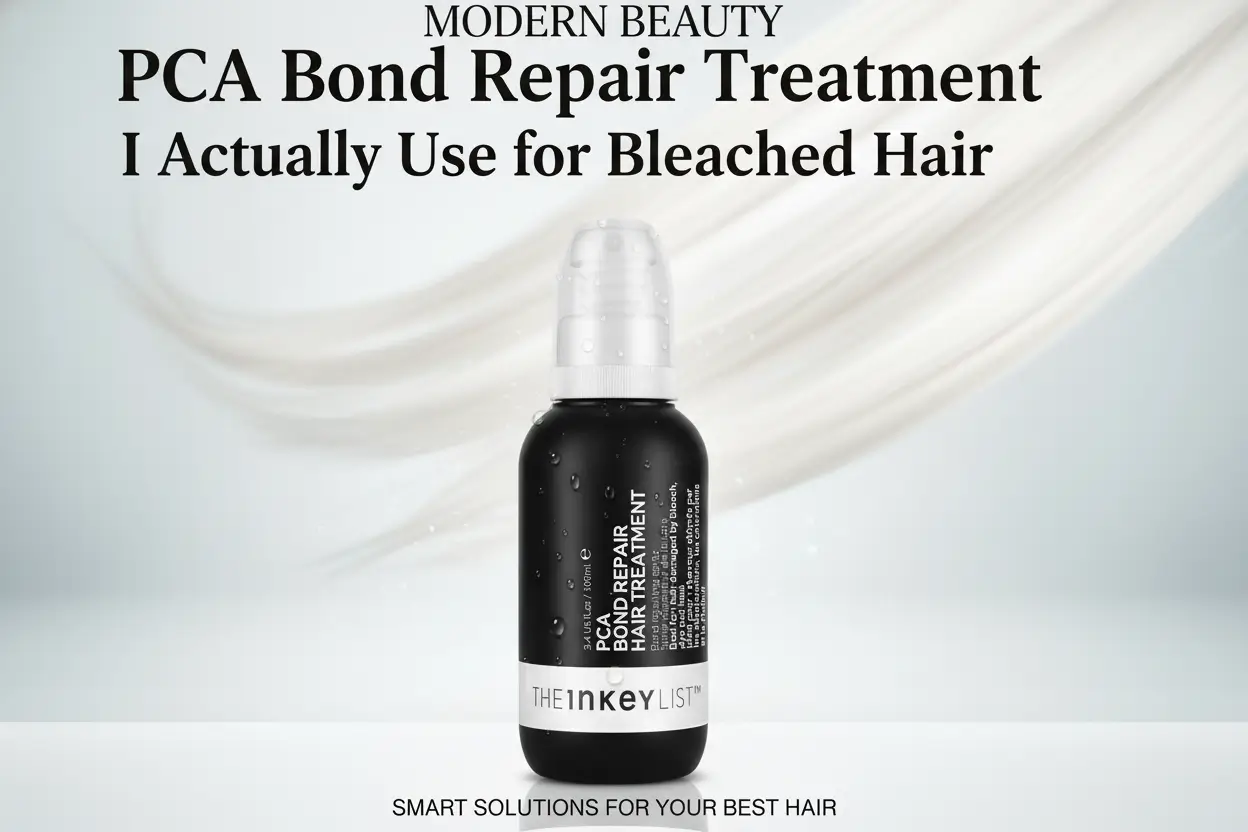

I made the classic mistake of thinking conditioner alone would fix bleached ends. After one too many salon sessions and daily heat, my hair felt like straw. That’s when I added the pca bond repair treatment to my lineup, a 3.38 fl oz bottle that promised to help fortify and protect hair damaged by bleach, color and heat styling.
I used it twice a week for a month and integrated it into my self-care ritual rather than treating it like a miracle fix. The product name is pca bond repair treatment, and yes I say it out loud in the shower when I apply it—because ritual matters. Want to skip the guessing and know whether it actually fits your routine?

Why This Earned a Spot in My Routine
For me, beauty products need to be practical. I have a gym bag, a minimalist vanity, and exactly zero patience for multi-step rituals that don’t deliver. The pca bond repair treatment fits into busy mornings and lazy Sundays alike. I reach for it on wash days when my hair needs a proper mid-week pick-me-up, and after heavy color or heat styling sessions when texture and frizz bother me most.
If your hair is bleached, colored, heat-styled, or just generally stressed, you’ll appreciate how it stacks into real routines: apply in the shower, leave for a few minutes while you shave or mask, rinse, style. It plays well with sulfate-free shampoos, my leave-in heat protectant, and simple oils for ends.
What Sold Me On It
- Focused purpose: The product is explicitly for repairing, protecting and strengthening hair damaged by bleach, color and heat styling. That clarity made it a no-brainer for my damaged, peroxide-processed hair.
- Texture and absorption: Lightweight cream that spreads easily — not heavy or waxy. It melts into strands instead of sitting on top, so my hair dries without an oily finish and keeps a natural movement.
- Compatibility: Works for multiple hair types. If your hair is fine but chemically treated, you can use smaller amounts. If you’re thick or coily and color-treated, I found a slightly longer leave-in time helped with manageability and frizz control.
- Packaging and size: The 3.38 fl oz bottle is compact enough for a vanity or travel kit — I stash it in my gym bag for after-swim care or for quick touch-ups when I’m on the go.
- Real benefits I noticed: Easier detangling, softer texture, and more consistent styling. It feels like it supports my hair structure without masking damage with silicones. I liked that it paired well with both matte and dewy finishes in my styling products.

Mistakes I See People Make With Bond-Building Treatments
- Using it every single wash: I tried daily use at first and my hair felt weighed down. For me, twice a week is the sweet spot — more is not always better.
- Skipping the basics: Expecting one product to replace gentle shampooing and heat protection is wishful thinking. Bond repair products work best alongside a low-heat, low-damage workflow.
- Applying to the scalp: I used to smear everything at the roots. For the pca bond repair treatment, focus on mid-lengths to ends where bleach and heat cause the most trouble.
- Ignoring texture differences: Fine hair needs a lighter touch; thick or curly hair benefits from a touch more product and a slightly longer leave-in time to smooth frizz.
- Expecting overnight miracles: If you want instant salon-level reconstruction after one use, you’ll be disappointed. Think of it as consistent hair repair support that improves styling, manageability, and appearance over time.

How I Use It — My Weekly Ritual
- Shampoo gently to remove product build-up. I use a sulfate-free cleanser to protect the hair barrier and color.
- After towel blotting, I apply a quarter to half a dime-size amount of the pca bond repair treatment through damp mid-lengths and ends. If my hair is thicker, I use more — you’ll learn your sweet spot fast.
- I leave it on for 3 to 5 minutes while I do other quick self-care tasks — shave, mask, or tidy up. This gives the texture time to absorb without a long wait.
- Rinse and follow with my regular lightweight conditioner if I need extra slip. For day-after refreshes, a small dab on dry ends tames frizz and adds smoothness without greasiness.
- Style with my usual heat protectant and low-to-medium heat tools. The treatment helps with heat protection in practice by improving manageability and reducing excess styling time.

If You’re Hesitating, Read This
I had a few doubts before committing, and I’ll lay them out like a friend would:
- Will it make my hair greasy? For me, no — as long as I use the right amount for my hair type. Fine hair needs less; thick hair can handle more.
- Is it redundant with my conditioner? I viewed it as a targeted treatment rather than a daily conditioner replacement — complementary, not duplicative.
- What about my scalp? I avoid my scalp with this. It’s meant for mid-lengths to ends where bleach and heat cause visible damage and frizz.
- Will it clash with other styling products? It layered well for me. I use it before leave-ins and heat protectants, and I didn’t notice pilling or heavy build-up when I rinsed properly.
- Will it actually help my color look better? I saw smoother texture and less frizz, which makes color look more polished. It helped styling last longer because my hair behaved more predictably.
Honestly, the pca bond repair treatment earned a spot in my routine because it does what it says without drama: it helps fortify and protect bleached, colored and heat-styled hair, blends into a weekly ritual, and keeps styling simple. It’s right for anyone who colors or heats their hair regularly and wants a no-nonsense product that improves texture, manageability, and confidence.
Some links are affiliate. As an Amazon Associate, I earn from qualifying purchases – at no extra cost to you. It helps keep these finds coming. Thanks for your support!