
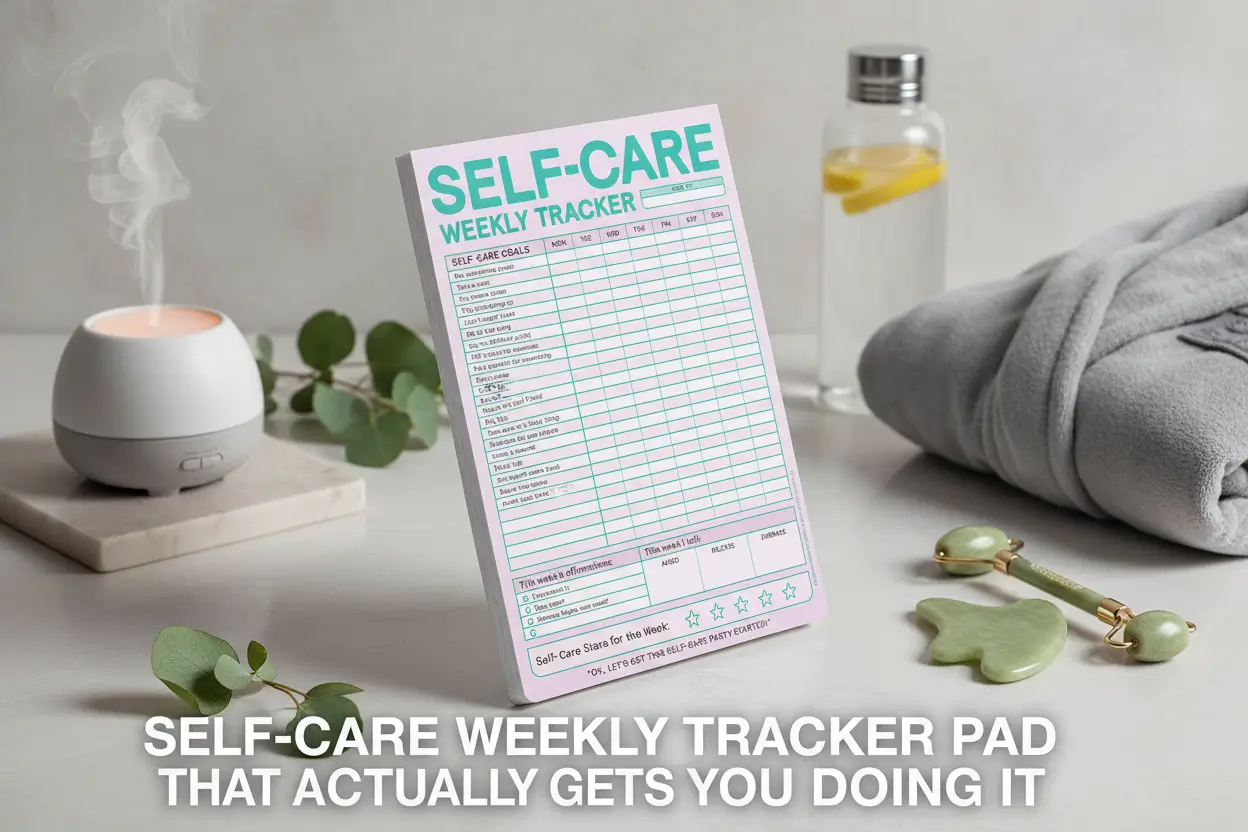

I finally grabbed a self-care weekly tracker pad after I realized I was skipping 3 little things I used to depend on every week — stretching, a mask night, and a mindful 10-minute break. The Knock Knock Self-Care Weekly Tracker Pad slid into my routine and stopped that slow drift where self-care becomes a to-do that never gets done.
I wanted something low-drama: a compact checklist that fits in a gym bag or on a crowded vanity, pastel pages that don’t feel like homework, and a format that makes habit-building painless. Could a 6 x 9-inch pad really change my daily routine and nudge me back toward hydration, movement, and small comforts?

Why This Earned a Spot in My Routine
For me, the win came from portability and simplicity. I toss this 6 x 9-inch pad in my tote or place it on my bathroom shelf where I actually see it. It’s not a big planner that needs time to open and analyze – it’s a step-by-step checklist. On busy mornings, I glance at the pastel squares and tick off hydration, a quick scalp massage, or a 5-minute stretch. On travel days it slips into my carry-on without adding bulk to my minimal wardrobe essentials.
If your days look like mine – back-to-back meetings, gym runs, and a tendency to skip bedtime rituals – this is designed to make self-care doable, not theatrical. It’s also desk-friendly for anyone who wants to build a self-care ritual around micro-breaks, layering in quick wins like a breath exercise or a skin hydrating spritz.
The Details That Actually Matter
- Size and layout – 6 x 9 inches is small enough to carry, big enough to write on comfortably. The weekly grid format gives visible progress across 7 days so habit formation feels tangible.
- Design and color – pastel pages that are calm, not screaming. The soft palette makes the pad feel like a treat on a vanity or in a gym bag.
- Step-by-step checklist – prompts for simple acts (hydration, movement, skin care, sleep prep) so you don’t invent new friction deciding what to do.
- Paper quality – writes well with ballpoint or gel; no bleeding so you can track quickly and move on. Easy-storage pages tear off cleanly.
- Practical for different needs – whether your focus is hydration, scalp care, frizz control, or a quick hair treatment on wash day, the checklist is flexible. I used it for long-wear routine planning before events and for low-effort nightly rituals when I’m tired.

How I’d Choose Between Similar Options
When I compare tracker pads, I look at three things and accept the trade-offs:
- Portability vs space – Smaller pads like this one fit a gym bag and a small vanity, but you get less writing space. I prefer portability for a daily checklist; if you journal long-form, choose a larger planner.
- Design prompts vs blank freedom – Pre-written prompts reduce decision fatigue. If you like guided routines, go with a prompted pad. If you already have a solid routine and want flexibility, choose a blank checklist.
- Durability vs disposability – Some trackers are heavier card stock for keepsakes. This Knock Knock pad is designed for weekly use and tear-off convenience. If you want a long-term habit tracker, consider archiving pages in a folder.

How I Actually Use It Day to Day
- Morning glance – I check the pad before coffee. If it says “hydrate” and “stretch,” I do a 30-second stretch and drink a glass of water. Small wins stack up.
- Midday reset – At lunch I tick off a breathing break or a walk. The visual of checked boxes keeps me from letting the afternoon slide into screen fog.
- Hair and skin mini-tasks – I note scalp care or a quick hair-mask on wash days. The prompts help me avoid skipping treatments that control frizz or add heat protection later.
- Evening ritual – I use the pad to remember a mask night or a hydration boost. Simple checkboxes remove the debate over what the evening routine should be.
- Weekly review – On Sunday I rip off the completed page and note patterns. Maybe I missed sleep prep two nights in a row; that becomes my focus for the week ahead.
If You’re Hesitating, Read This
- Will it feel like another chore? I worried about that too. The prompts are short and visually friendly, so it feels more like a 2-minute habit than a task list. If your routine already includes quick acts, this amplifies them instead of replacing them.
- What if I don’t stick with it? I found that checking 3 boxes a day is far easier than committing to big rituals. The pad is forgiving – you can switch focuses weekly without guilt.
- Is the size too small? For me, the sweet spot is portability. If you need space for notes or long journaling, combine the pad with a notebook—use the pad for prompts and the notebook for thoughts.
- Will it match my style? The pastel design is understated and works with most vanities and minimal wardrobes. It doesn’t scream “planner,” which means I actually leave it out where I can see it.
- Does it duplicate other apps or planners? I still use my phone calendar, but the tactile act of checking boxes triggers a different kind of satisfaction than a digital check. That little dopamine hit matters when you’re building habits.

I keep this pad on my vanity and in my gym bag because it’s the least resistible way I’ve found to build small, consistent self-care acts. It’s for anyone who wants to turn hydration, scalp care, quick movement, and sleep prep into tiny, repeatable wins without added drama.
Some links are affiliate. As an Amazon Associate, I earn from qualifying purchases – at no extra cost to you. It helps keep these finds coming. Thanks for your support!
”
}