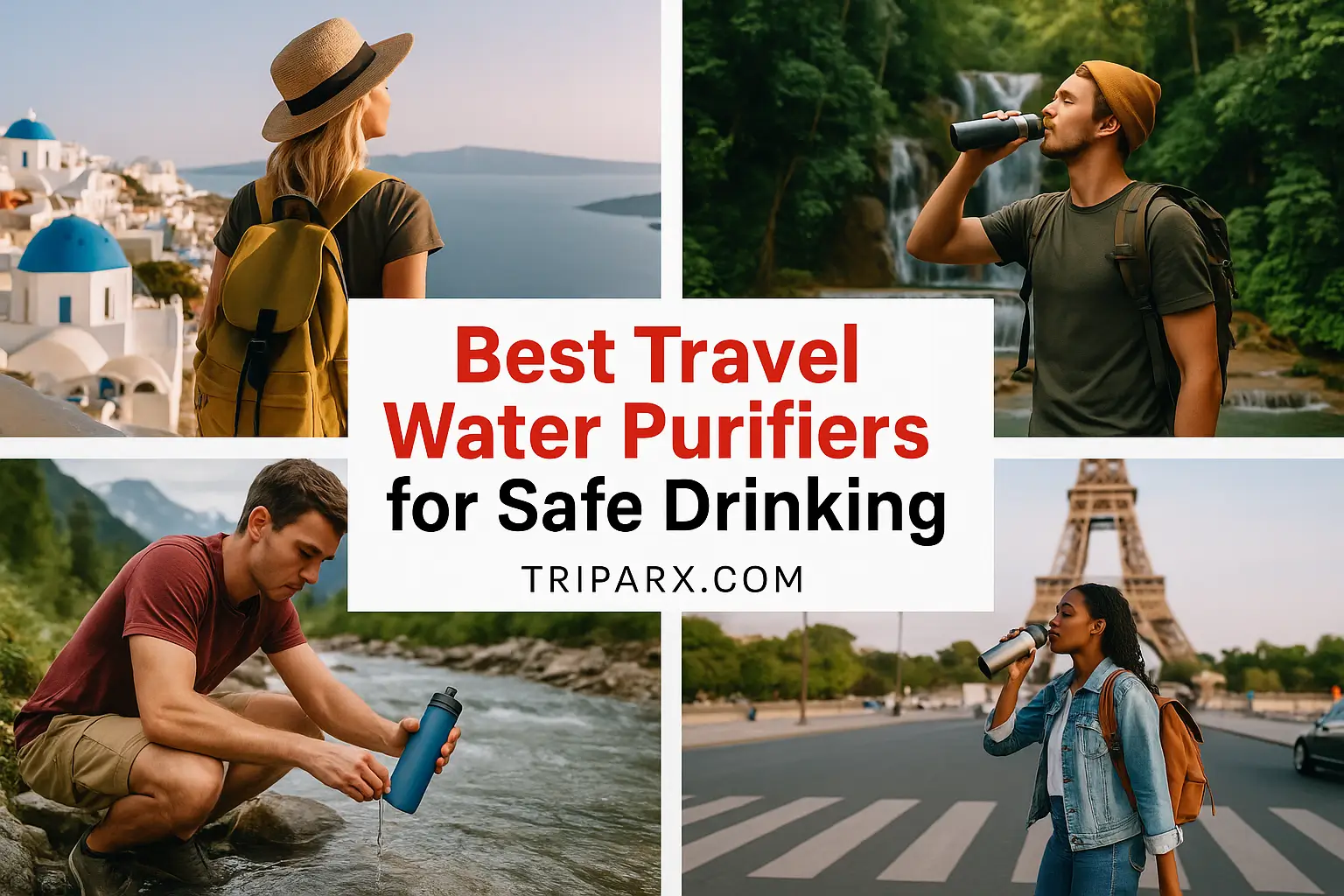

Best Travel Water Purifiers for Safe Drinking: Stay Healthy Anywhere You Go
TripMates, imagine you’re halfway through a remote hike or settling into a hostel overseas when you realize the tap water isn’t exactly “drink friendly” — your stomach immediately sends out an SOS. That’s why having the best travel water purifiers by your side can be a total game changer. Whether you’re trekking through the wilderness, navigating international cities, or just on a family vacation, safe drinking water is non-negotiable.
In this ultimate guide, we’ll break down the different types of travel purifiers, how they work, when to pick each one, and what features actually matter. Think portable water filters that handle murky creek water, UV water purifiers zapping invisible viruses, and handy purification tablets perfect for packing light. Whether you’re a backpacker, camper, business traveler, or globe-trotting family, there’s something here for you.
You’ll also score quick recommendations by travel style, learn what certifications to look for, and get practical tips on packing and maintaining your purifier. Trust me, your gut (and your travel plans) will thank you later.
Portable Water Filters for Travel
When it comes to outdoorsy trips like backpacking, day hikes, or staying in rustic hostels, portable water filters often steal the spotlight. These clever devices physically strain out bacteria and protozoa — the usual suspects that cause drinking-water illness. Just keep in mind, most portable water filters won’t catch viruses since those are tiny troublemakers slipping through the mesh.
Types of portable filters
There’s a filter style for nearly every traveler. Straw filters let you sip directly from streams or water bottles but might feel a bit slow for group use. Pump filters use a manual mechanism to quickly push water through a filter — great for groups but bulkier to carry. Bottle-integrated filters combine water storage with filtration, making hydration on the go seamless. Lastly, squeeze filters let you push turbid water through by hand or gravity, popular with ultralight backpackers.
Pros and cons? Straws are ultralight but limited in volume. Pumps pace well but require elbow grease. Bottle filters are convenient but pricier, and squeeze filters balance weight and speed nicely but need clean hands.
Best-use cases & performance
Straw filters suit solo day hikes or emergencies while pump filters shine on longer trips with several thirsty mouths. Bottle filters fit urban and semi-remote adventurers who want simplicity without the fuss. Squeeze filters appeal to minimalist backpackers obsessed with ounces. Flow rates and filter life vary from roughly 100 to 1,000+ liters before needing replacement, so match your choice to trip length and group size.
Practical tips
Here’s a quick tip: always pre-filter super muddy or murky water through a bandana or coffee filter to avoid clogging your device. Regular cleaning is crucial — follow the manufacturer’s instructions for backflushing or rinsing. And keep spare cartridges if you’re on an extended trip. Trust me, a blocked filter at mile 20 is no fun.
UV Water Purifiers for Travel
UV water purifiers for travel use ultraviolet light, specifically UV-C, to zap viruses, bacteria, and protozoa without chemicals or filters. They work like a microscopic germ killer in your bottle, disrupting the DNA of nasties so they can’t reproduce. This makes UV devices uniquely effective against viruses — a common shortfall of standard filters.
Popular UV devices & form factors
UV purifiers come mainly as pen-style gadgets you dip into water, bottle-integrated UV caps that sterilize on the go, or compact UV sticks you wave inside a container. They’re generally lightweight and easy to pack, though battery life is something to watch — most use rechargeable or replaceable AAAs.
When to choose UV vs. filter
UV purifiers excel with clear water where their rays penetrate efficiently. If you’re facing murky or sediment-heavy water, filters, or a combo approach, will serve better. UV works fast (generally under 2 minutes), making it perfect for solo travelers or small groups who want quick, chemical-free treatment. Plus, UV can feel lighter since you’re not lugging pump gear.
Usage tips & troubleshooting
Always pre-filter cloudy water to maximize UV effectiveness. Follow dosing times carefully — usually about 90 seconds per liter. Clean the UV bulb regularly to keep those rays strong. Heads up for flyers: check airline battery regulations since some UV purifiers run on lithium-ion batteries that might need special packing.
Water Purification Tablets & Drops
Water purification tablets for travel are chemical treatments — usually chlorine, chlorine dioxide, or iodine — designed to kill bacteria, viruses, and protozoa. They’re tiny heroes for backpackers and international travelers wanting a lightweight, no-fuss backup to bulky gear.
How to use tablets safely
Dosage and contact times matter big time. Most tablets need 30 minutes to 4 hours to fully disinfect, depending on solution and water temperature. Warmer water speeds up the process. Also, shake or stir your container well after adding tablets, then let sediment settle before drinking.
Pros/cons & ideal scenarios
Tablets are featherweight and small, making them perfect for emergency stashes or international trips where packing gear is a pain. Downsides? Some leave a distinct aftertaste, and effectiveness may drop with very dirty water or very cold temps. Tablets also don’t filter sediment, so you’ll want to pre-filter murky sources.
Health & safety notes
Beware iodine tablets if you have thyroid issues, are pregnant, or allergic — chlorine and chlorine dioxide are gentler alternatives. Use neutralizers to reduce aftertaste if you’re sensitive. Check expiry dates since chemical potency fades over time — expired tablets could leave you high and dry, literally.
Choosing the Best Travel Water Filter
Picking the best travel water filter for international travel boils down to a savvy checklist. Start with pathogen removal capabilities — your purifier should target bacteria, protozoa, and ideally viruses, especially abroad. Look for NSF, EPA, WHO, or CDC certifications to ensure tested performance. Weight and packability matter if you’re backpacking, while flow rate and ease of use count for families or groups. Maintenance complexity and cost per liter also tip the scales.
Compare by travel type
If you’re a solo backpacker, ultralight straw filters or UV pens fit best. Families or groups will appreciate pump or bottle filters with larger capacities and easier sharing. For urban international travel, compact filters or tablets might suffice; for remote expeditions, combine filtration and chemical disinfection for peace of mind.
Longevity, replacements & total cost of ownership
Consider how many liters your filter handles before needing new cartridges or parts. Factor replacement costs and availability of spares in the field — can you service your device on the go? Sometimes a higher upfront cost pays off with longer lifespan and cheaper upkeep.
Packing, customs, and legal tips
Declare your water gear if required when crossing borders to avoid surprises. For UV devices, know airline battery rules — some lithium batteries must go in carry-on luggage. Always carry purifiers or tablets in accessible spots for security screening and easy reach during your trip.
✈️ Ready to travel like a pro? I’ve put together my ultimate Amazon travel gear list — the same stuff I swear by on every trip. From luggage that survives baggage handlers to gadgets that keep your water clean and your phone alive in the middle of nowhere — it’s all here.
👉 See my full travel gear list on Amazon
Conclusion
Alright TripMates, let’s wrap up what you need to know about the best travel water purifiers. Portable water filters excel at removing bacteria and protozoa, perfect for muddy streams and wilderness treks but don’t nix viruses. UV water purifiers fill that viral gap efficiently — ideal for clear water scenarios or lightweight solo travel. Water purification tablets act as trusty chemical backups: small, lightweight, and versatile, though with some taste and timing trade-offs.
Choosing your purifier boils down to your itinerary, group size, and water conditions. Solo backpacker? Lightweight straw filters or a UV pen have you covered. Families or groups will want faster, higher-capacity pump or bottle filters. Tablets and drops should always ride shotgun as a fail-safe.
Never skip pre-filtering turbid water, respect prescribed contact times, and verify safety certifications. Don’t forget to pack extra filters or tablets to keep safe drinking water flowing. If you’re planning ahead, consider downloading a printable checklist or checking local water safety info — you never know when a clean sip will save your trip.
🌍 Before you go, don’t travel half-prepared. I’ve done the trial and error so you don’t have to. My Amazon travel picks have saved my trips more times than I can count — and probably saved my sanity too.
👉 Grab the gear I trust and thank me later
For more practical advice and essential guides for smarter travel, explore our travel tips category. Want to see how it all comes together? Watch our latest adventures on YouTube or follow our travel moments on Instagram. Safe travels, TripMates!