
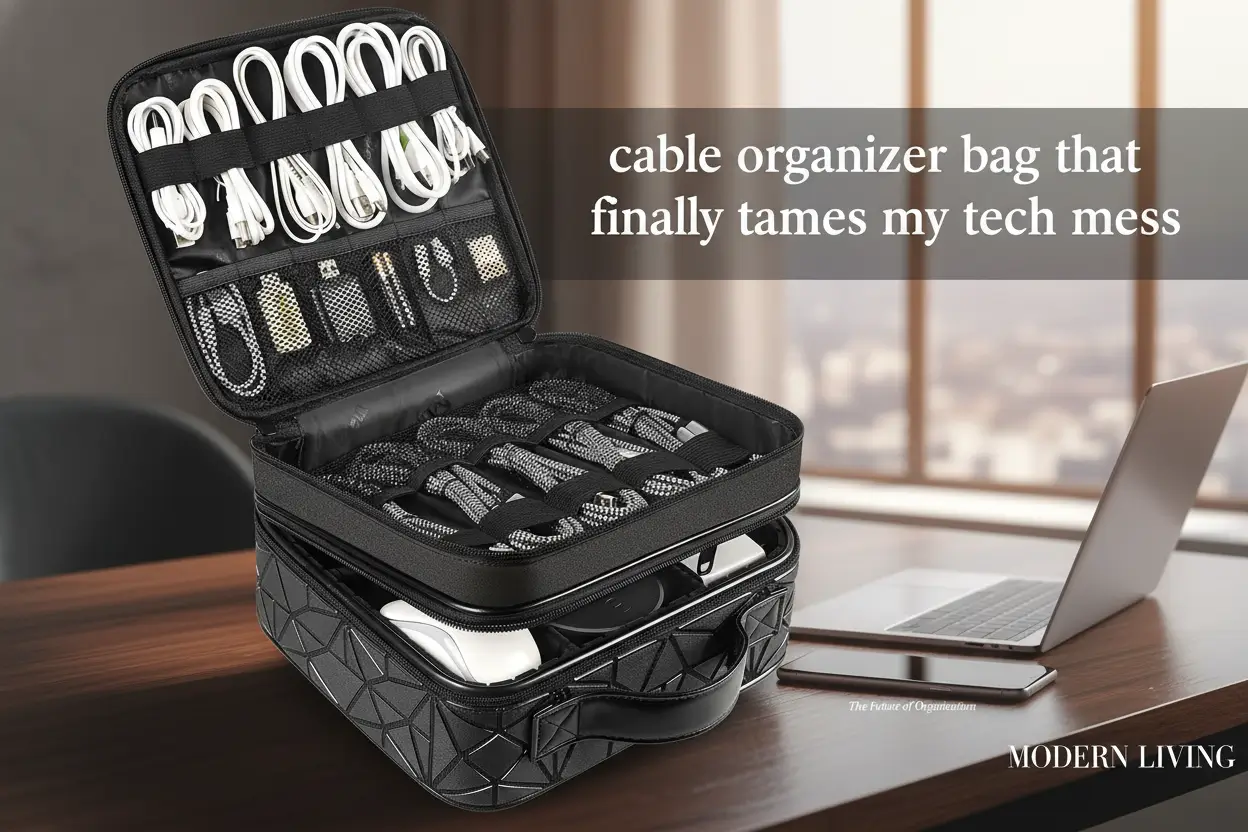

I learned the hard lesson that a single tangled cable can ruin a travel morning. I didn’t realize how often until a cable organizer bag saved me from a frantic 7-minute cord hunt right before a dawn bus in Lisbon.
On my trips I want small wins: find the charger in 10 seconds, not 10 minutes. This tech pouch with double layers and elastic bands changed how I pack and charge on the road. Who wouldn’t want their cables, SD cards, earbuds, and power bank in clear pockets instead of a knotted mess?
So how did a little zippered case become a travel staple in my backpack?

Why This Earned a Spot in My Bag
If you travel like I do—backpack, overnight trains, occasional hostel lockers, and juggling multiple devices—you need something that actually organizes. For me, the deciding factors were simple:
- I wanted a case I could toss into a backpack or carry-on without things rattling around.
- I needed quick access to small items: SD cards, flash drives, a USB-C cable, earbuds.
- I needed a little protection when my bag gets knocked around in airport bins or hostel cubbies.
This product’s double layers mean I can separate charging gear from storage items. One layer holds the charger, power bank, and thicker cords; the other hides the tiny things that always disappear in a suitcase. That organization has saved me from the tiny panics travelers know all too well.
Key Features In Real Travel
I don’t care about specs on paper unless they translate to fewer headaches on the road. These are the features that actually matter to me:
- Double layers: Two main separate compartments keep charging gear and accessories isolated. No more digging through a pile of cables.
- Pockets for small stuff: Plenty of slots sized for flash drives, SD cards, and a phone. Small items stay visible and don’t migrate into the bottom of my pack.
- Varied elastic bands: Different size bands hold USB cables, earbuds, and a slim power bank snugly so nothing unravels mid-flight.
- Waterproof and shockproof design: In real terms this means my gear survived a rainy night in a hostel courtyard and a dropped tote without a shredded cable.
- Portable and packable: It fits flat in a side pocket of my daypack or inside a suitcase compression cube. I can move between backpacks and carry-ons without re-sorting.

How I’d Choose Between Similar Options
Not all tech pouches are created equal. When I compare organizers I focus on these trade-offs:
- Size vs packability: Bigger means more cables, but also more weight and bulk in a carry-on. I pick slim profiles for day trips and slightly larger ones for multi-day trips where I bring a power bank.
- Pocket layout: If it has dedicated slots for SD cards and a phone pocket, I value that more than extra elastic loops I won’t use.
- Protection level: Is it lightly padded or rigid? If I’m tossing it in checked luggage I want sturdier shock protection. For a backpack day bag, a flexible waterproof pouch is fine.
- TSA-friendliness: For international travel, a simple zip closure that opens flat is better at security checkpoints than a bulky case you have to unpack.

How I Actually Use It Day to Day
Practical steps I use every trip so this thing earns its keep:
- Before packing, I sort: top layer for chargers and power bank, bottom layer for small accessories. It takes 90 seconds and saves me 10+ minutes later.
- I wrap cables loosely and tuck them into elastic bands. No tight coils that stress the cable ends.
- SD cards and flash drives go into dedicated pockets. I label one slot for travel documents like a small adapter or SIM removal tool.
- When flying, I keep the case in my daypack side pocket for fast access to a phone charger during layovers or a headphone swap mid-flight.
- For maintenance, I air it out after humid trips and wipe the exterior; that keeps any water resistance working and prevents mold in long journeys.
Buyer Doubts I Had (And How They Played Out)
If you’re hesitating, I had the same doubts and here’s what happened:
- “Is this bulky?” For me it’s compact enough for a backpack side pocket. You lose a little space, but you gain hours of time not searching for cords.
- “Do I really need elastic bands?” Yes. They stop cords from untangling and protect connector tips. I used to lose two chargers a year to frayed ends; that stopped once I started using them.
- “Will small items still fall out?” The pockets are snug. SD cards and flash drives stayed put even when I tossed the case into a suitcase.
- “Is it durable enough for rough travel?” Between the water-resistant exterior and shockproof padding, it held up to hostel locker shoves and airport handling on several trips.
- “Is it worth having one more thing to carry?” I used to think that too. But replacing lost cables and wasting time is a bigger burden than a slim pouch in my bag.

I pack this cable organizer bag on most trips because it saves me time and keeps small tech safe. If you travel with multiple cables, a power bank, and tiny accessories, this is the kind of organized simplicity that actually improves a trip.
Some links are affiliate. As an Amazon Associate, I earn from qualifying purchases – at no extra cost to you. It helps keep these finds coming. Thanks for your support!