
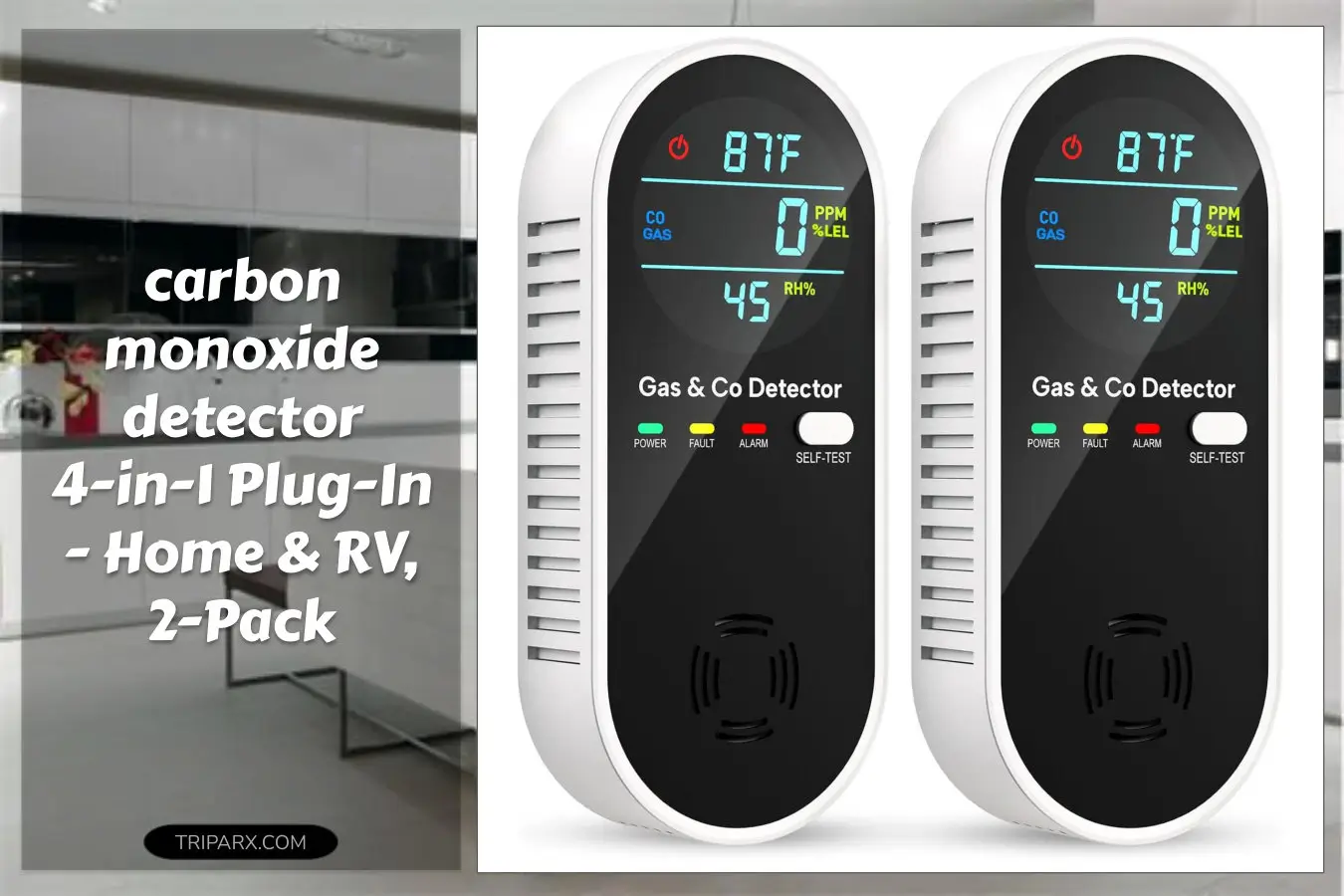

carbon monoxide detector mistakes start small: using a single smoke alarm and assuming you are covered. That one device won’t sense invisible carbon monoxide or a leaking propane line, and that gap can cost you hours of safe evacuation time.
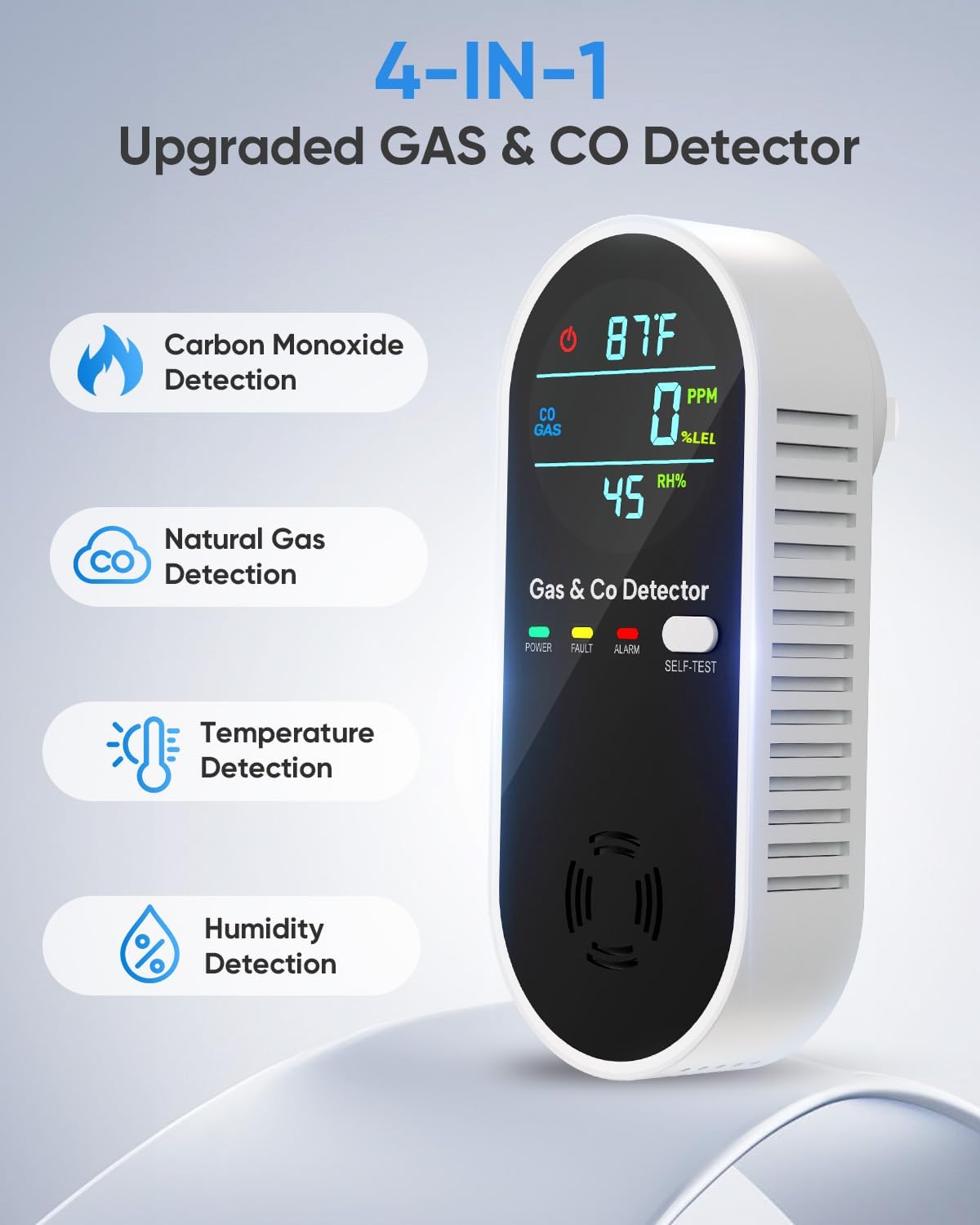
This 4-in-1 carbon monoxide detector and natural gas detector blends CO and combustible gas sensing with temperature and humidity monitoring, plus dual sensors and dual alarms for faster, clearer warnings. Who wants to risk fuzzy alerts when family, pets, and your RV are at stake?

Who This Is For
Living with a gas stove, furnace, or in an RV with propane systems? This is for you. The unit suits homeowners, renters, and road-trippers who need plug-in convenience plus clear warnings.
Works well in kitchens, garages, basements, and camper interiors where carbon monoxide and combustible gas risk overlap. It is compact for wall outlets and portable enough to move between rooms or an RV berth.
Key Features & Real-World Use
- 4-in-1 detection – CO sensor, natural gas sensor, temperature and humidity monitoring for fuller environmental context.
- Dual sensors and alarms – redundant sensing reduces false negatives and speeds detection of methane or LPG leaks.
- Plug-in form factor – slips into a wall outlet for continuous power; ideal if you prefer not to install hardwired units.
- Compact black design – low-profile styling blends with modern kitchens, living rooms, and RV interiors.
- Visual and audible alerts – LED indicator plus a loud alarm helps wake sleepers and warn neighbors in shared walls.
- Easy maintenance – wipe-clean housing, replaceable battery backup options, and simple sensor checks keep it reliable.
How to Choose
Match features to your needs with three quick criteria:
- Sensors you need: If you use propane, LPG, or have a gas furnace, pick a unit that detects combustible gas plus CO.
- Power and placement: Plug-in units are easiest for renters; battery backup preserves function during outages.
- Alert clarity: Dual alarms, LEDs, and clear voice or tone patterns reduce confusion in the middle of the night.
Trade-offs: plug-in convenience versus hardwired permanence; smaller units trade screen size for portability.

Quick Setup & Use
- Unpack and read the quick-start sheet for safety and placement tips near gas appliances or sleeping areas.
- Plug the detector into a standard outlet at least 4 feet off the floor for gas sensing or at breathing height for CO awareness.
- Test the alarm using the test button to verify buzzer, LEDs, and any voice cues are functioning.
- Note temperature and humidity readouts to confirm sensor calibration; perform periodic visual inspections.
- Keep a spare battery or ensure battery backup is installed for outages and replace sensors per manufacturer guidance.
Buyer Doubts Solved
Will it confuse CO with natural gas? No. Dual sensors separate carbon monoxide detection from combustible gas sensing, so alerts are more specific.
Is plug-in safe for RV life? Yes. Plug-in form factor is travel-friendly and fits standard RV outlets. Use secure mounting and avoid blocking vents.
Worried about false alarms? Humidity and temp readings help filter nuisances; correct placement away from direct steam sources reduces false triggers.
Maintenance hassle? Minimal. Regular testing, an occasional wipe, and following sensor-life guidance keep performance reliable.
Unsure about installation? This is a no-tools, renter-friendly option that still offers professional-level sensing for peace of mind.

Installing a reliable 4-in-1 carbon monoxide detector brings instant situational awareness – from combustible gas leaks to rising CO levels plus ambient temp and humidity. Add one to your home and grab an extra for the RV so you never leave safety to chance.
Some links are affiliate. As an Amazon Associate, I earn from qualifying purchases — at no extra cost to you. It helps keep these finds coming. Thanks for your support!