
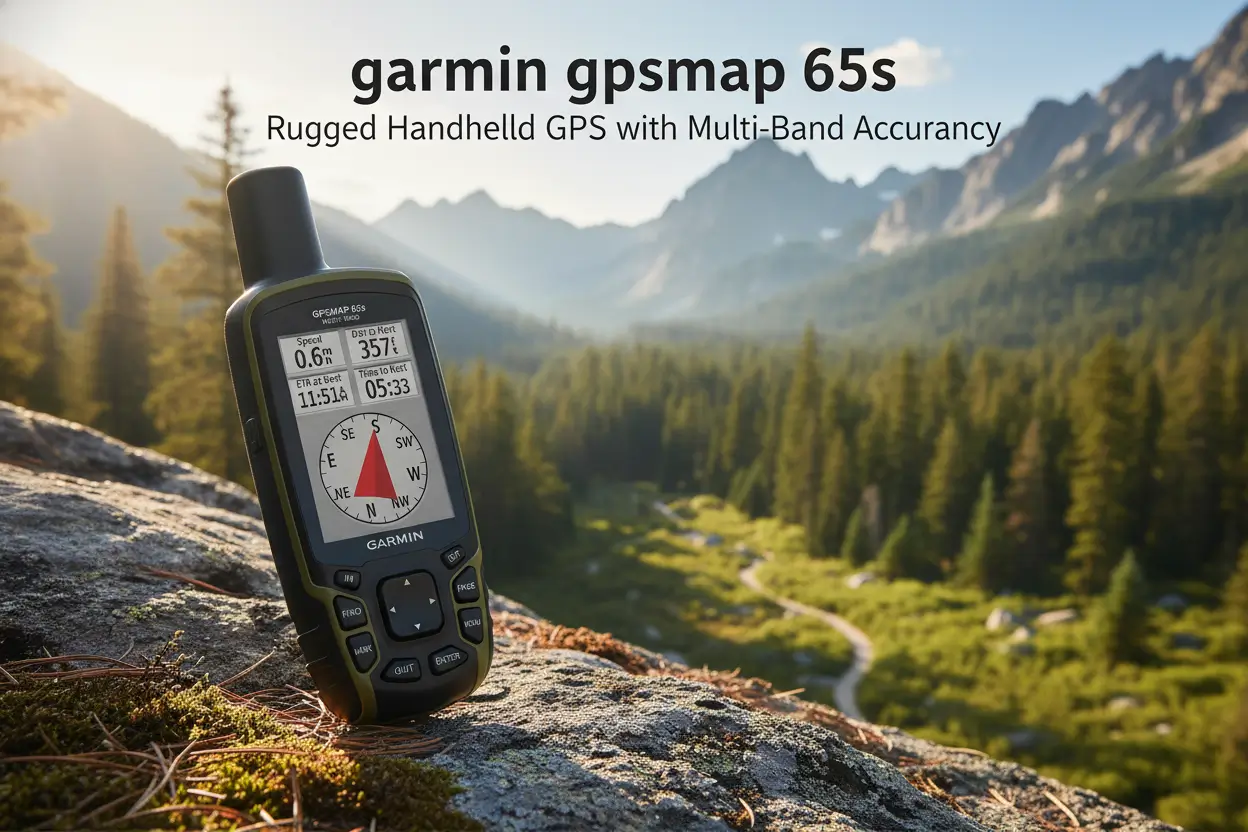

Mistake: trusting a pocket phone for serious navigation. The garmin gpsmap 65s puts a rugged, button-operated GPS in your hand so you avoid missed junctions and wasted miles. With a 2.6″ sunlight-readable color display and multi-band GNSS, it’s built for steep canyons, dense woods and urban canyons where single-band receivers struggle.
That kind of accuracy and physical control can save hours and anxiety on a 10+ mile route – and it fits a chest pocket or harness without flopping around. Ready to stop guessing and start navigating with confidence?

What Stands Out in Daily Use
- Multi-band technology & expanded GNSS support – keeps track in dense trees and deep valleys where single-band units lose fix. Ideal for backpacking, hunting and off-grid navigation.
- 2.6″ sunlight-readable color display – clear topo maps and routes without squinting; button control means you can operate it with gloves or wet hands.
- ABC sensors – altimeter, barometer and electronic compass for elevation profiling, weather trend awareness, and reliable bearings.
- Routable TopoActive mapping – follow trails and plan detours; works with downloadable maps and the Garmin Explore app for waypoint and route management.
- Wireless connectivity – Bluetooth and ANT+ for syncing tracks and connecting accessories like heart rate monitors or external sensors.
- Rugged ergonomics – button-operated, water-resistant housing, strap-friendly form factor, and durable materials designed for long seasons in the field.

How to Choose
Three quick criteria to compare handheld navigators:
- Positioning tech – prefer multi-band GNSS if you tackle canyons, steep ridgelines, or city cores; single-band is fine for casual trailheads.
- Control method – touchscreen vs buttons: buttons win for gloves, wet weather, and energy efficiency; touchscreens are more intuitive but fragile.
- Mapping & ecosystem – check for routable topo maps, app sync (Garmin Explore), and accessories (mounts, chest straps, external sensors).
Trade-off note: a more rugged, button-first device like this one is slightly heavier than a tiny phone mount, but you gain durability, battery resilience, and reliable inputs in harsh conditions.

From Box to Daily Use
- Unpack and inspect the unit and included lanyard or clip – check buttons and battery contacts for debris.
- Install batteries or charge if your model supports rechargeable packs; power on and complete initial satellite acquisition outdoors.
- Enable Bluetooth and pair with Garmin Explore on your phone to sync maps, waypoints, and firmware updates.
- Calibrate the electronic compass and set the altimeter reference if you have a known elevation point.
- Load a route or create a waypoint, then use routable TopoActive maps to simulate the track before heading out.
- Mount or stow the unit on your chest strap or pack hipbelt for quick access; protect screen with a slim cover when not in use.

Buyer Doubts Solved
Is it too bulky? It’s larger than a phone but fits chest pockets and attaches to packs. The trade-off is a durable housing and buttons that work with gloves.
What about battery and maintenance? It uses replaceable or rechargeable power options; keep contacts clean, update firmware periodically, and the unit will stay reliable season after season.
Do I need extra accessories? Optional items like a screen protector, chest mount, or external antenna improve usability, but the unit works well standalone for most hikers and guides.
Will it work without cell service? Yes. The garmin gpsmap 65s is primary GNSS-first hardware for offline routing and logging; phone apps are just for syncing and backup.
Is it worth upgrading from older handhelds? If you want multi-band accuracy, better fixes in canopy, and ABC sensors in a rugged package, it’s a clear step up.
In short: better satellite accuracy, proven ABC sensors, and button-first ergonomics mean more confident navigation on your next trail, climb, or sea passage. Pack the right tool and enjoy the route.
Some links are affiliate. As an Amazon Associate, I earn from qualifying purchases — at no extra cost to you. It helps keep these finds coming. Thanks for your support!