
This Japan travel guide is for first-timers who want a great trip without the 47-tab research spiral – because Japan travel only feels “expensive” until you know what to book first. One day you’re slurping perfect ramen under neon lights in Tokyo, the next you’re walking through a quiet bamboo grove in Kyoto, and then you’re in Osaka at midnight wondering how street food can taste this good.
For Japan travel, the easiest first-timer route is Tokyo + Kyoto + Osaka. Plan 7 to 10 days: Tokyo (3-4), Kyoto (2-3), Osaka (1-2), plus one day trip (Nara or Fuji). Book hotels near major stations, then lock your shinkansen seats if you travel in peak season.
Japan Travel in 60 Seconds (Pick-Your-Adventure)
- Tokyo for big-city energy, neighborhoods, shopping, day trips, and “wow” views.
- Kyoto for temples, old streets, bamboo, tea culture, and that classic Japan feeling.
- Osaka for food, nightlife, easy day trips (Nara), and theme parks.
- Mount Fuji / Hakone for hot springs, mountain views, and a reset day.
- Hiroshima for powerful history + an easy add-on if you love meaningful travel.
My simplest “first-time Japan” formula: Tokyo (3–5 nights) + Kyoto (2–4 nights) + Osaka (2–3 nights) + one day trip (Fuji or Nara). It flows, it’s efficient, and it hits every vibe.
Book-first shortcut: lock flights → pick hotels near transit → add 1–2 headline experiences → fill the rest with wandering.
Find flights to Japan | Tokyo hotels | Kyoto hotels | Osaka hotels
Japan Must-Try Experiences (Do These and You’ll “Get” Japan)
1) A temple moment that actually feels real (not checklist tourism)
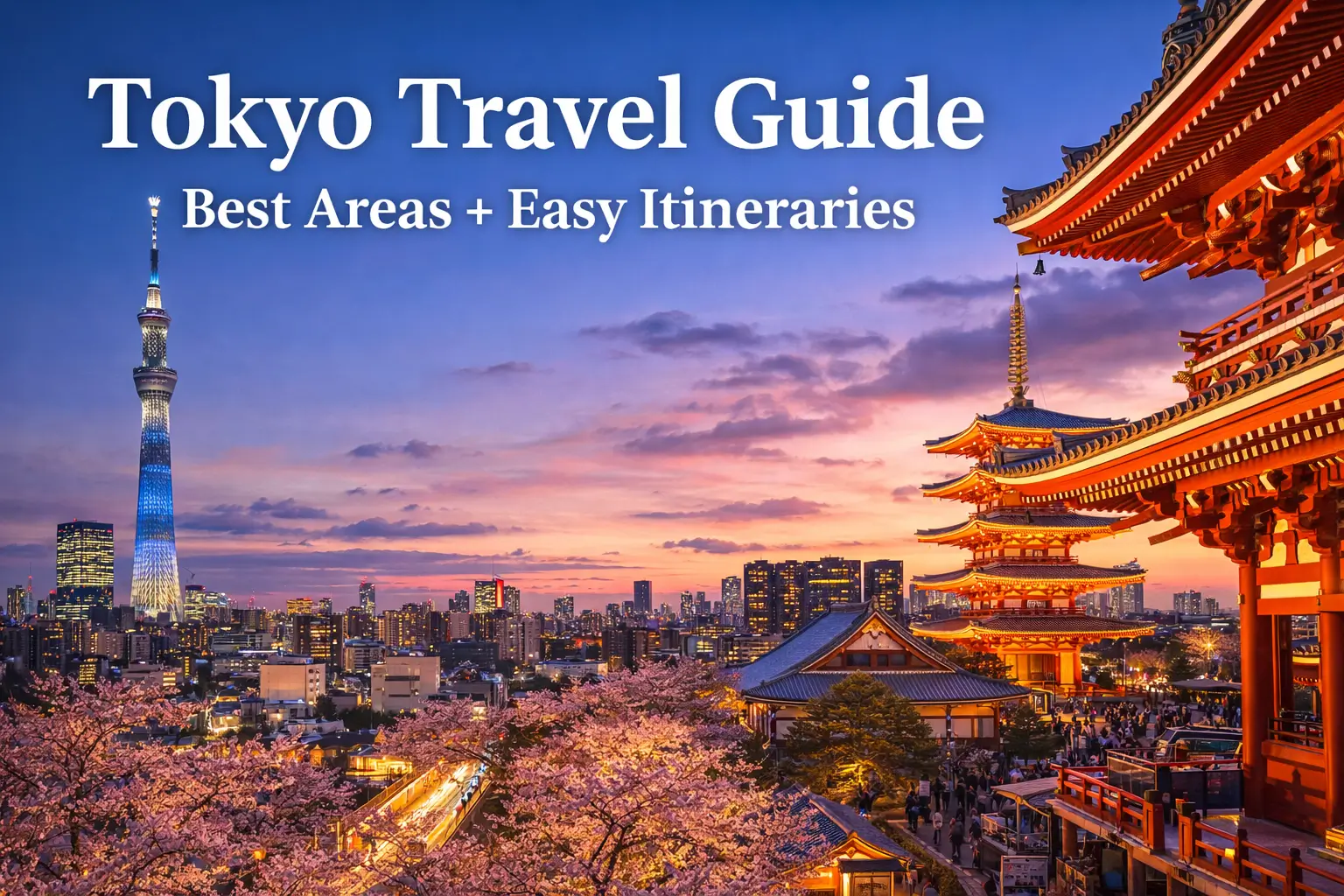
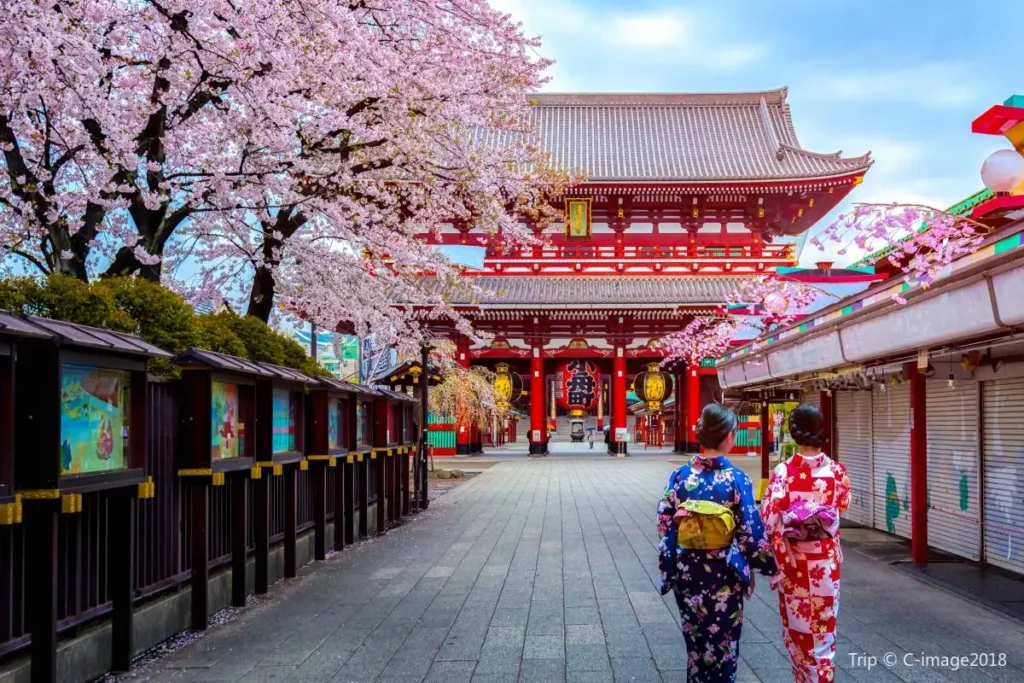
Pick one iconic spot and one quiet “accidental” shrine you stumble into. Go early, walk slow, and let it land. In Tokyo, Sensō-ji is a perfect first temple experience – historic, atmospheric, and surrounded by great street snacks.
2) A skyline view that rewires your brain
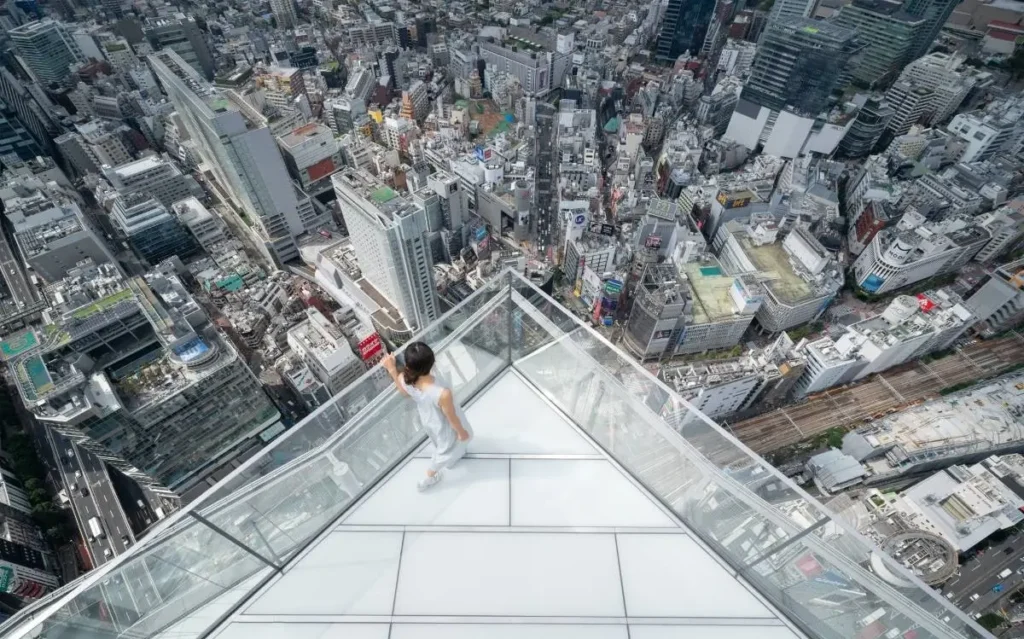
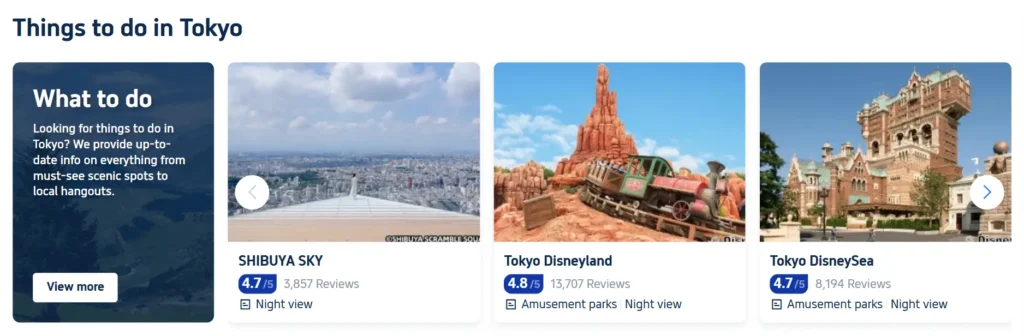
Tokyo is massive. Seeing it from above turns chaos into art. If you want a “I can’t believe this is real” photo, Shibuya Sky is a strong play.
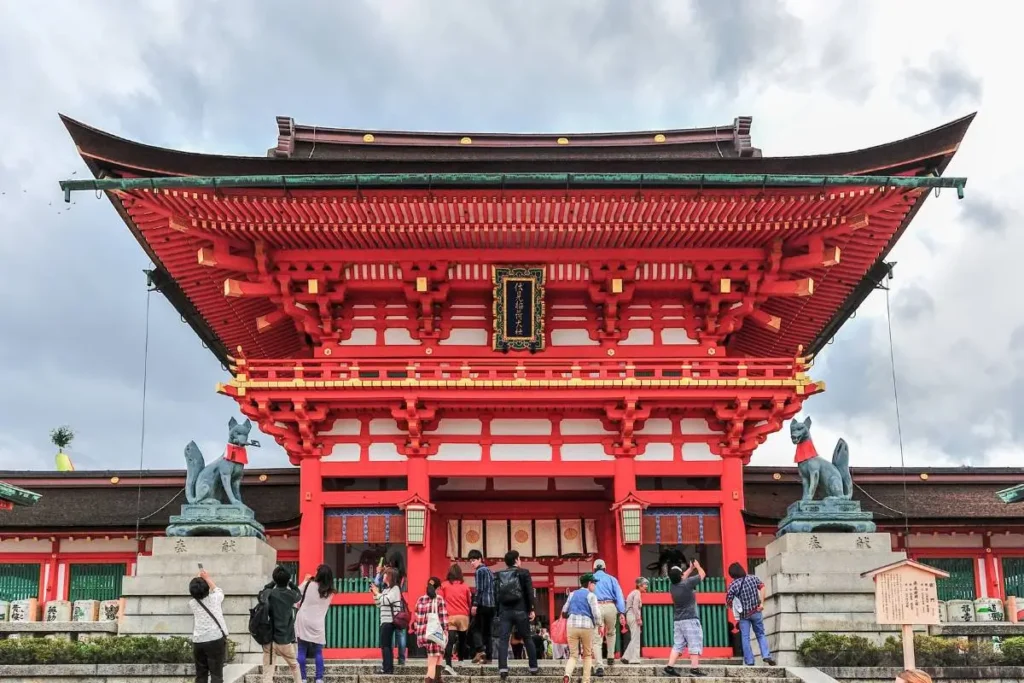
3) Kyoto’s iconic gates (the “this is Japan” scene)
Kyoto has a hundred beautiful places, but Fushimi Inari Taisha is the one that feels like you stepped into a movie. If you can, go early morning or later in the day to dodge peak crowds.
4) A Kyoto temple with a view (and a real “wow” balcony)
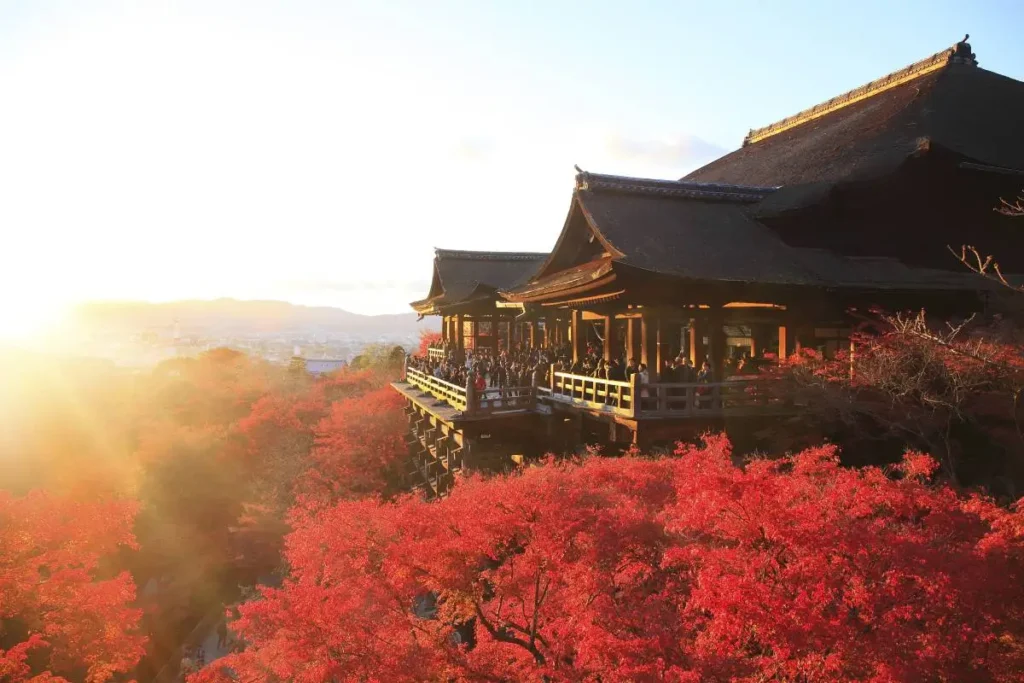
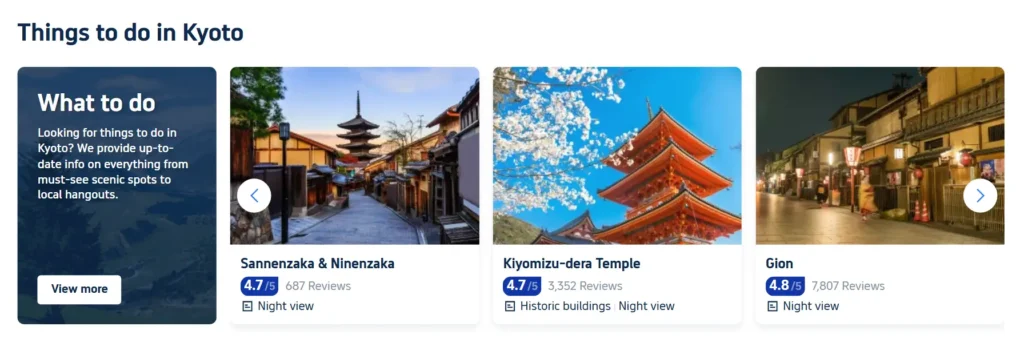
For classic Kyoto atmosphere and that famous stage view, Kiyomizu-dera delivers. Pair it with nearby old streets and you’ve got a full, beautiful half-day.
5) Osaka’s food night (you’ll remember this more than museums)
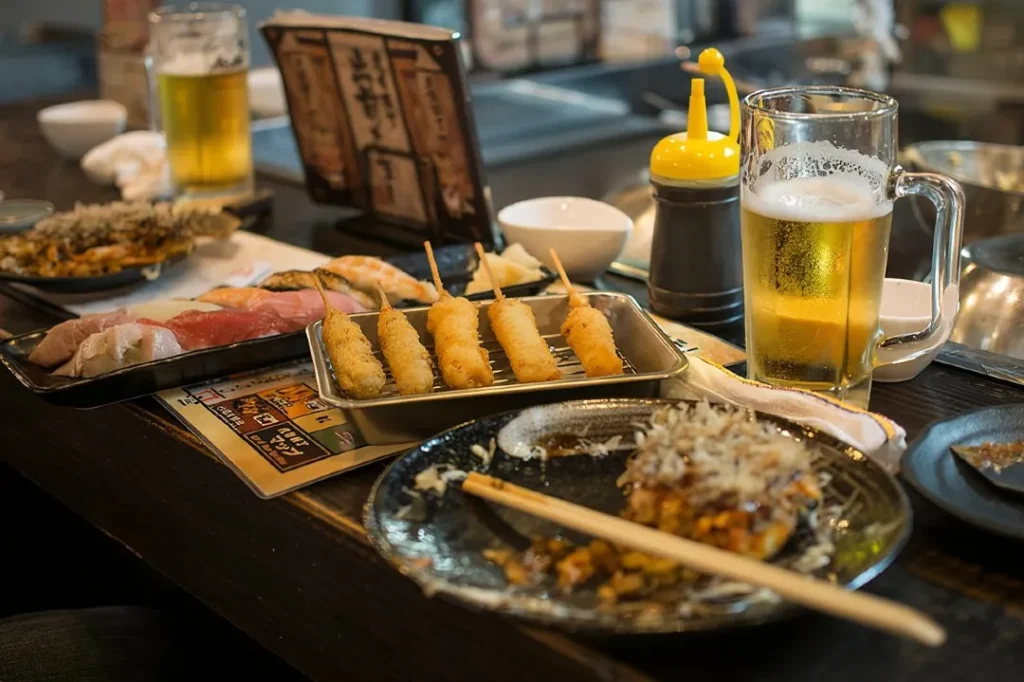
Osaka is casual, loud, and delicious. Give yourself one night with no agenda except: eat, walk, repeat. This is where Japan becomes fun in a completely different way.
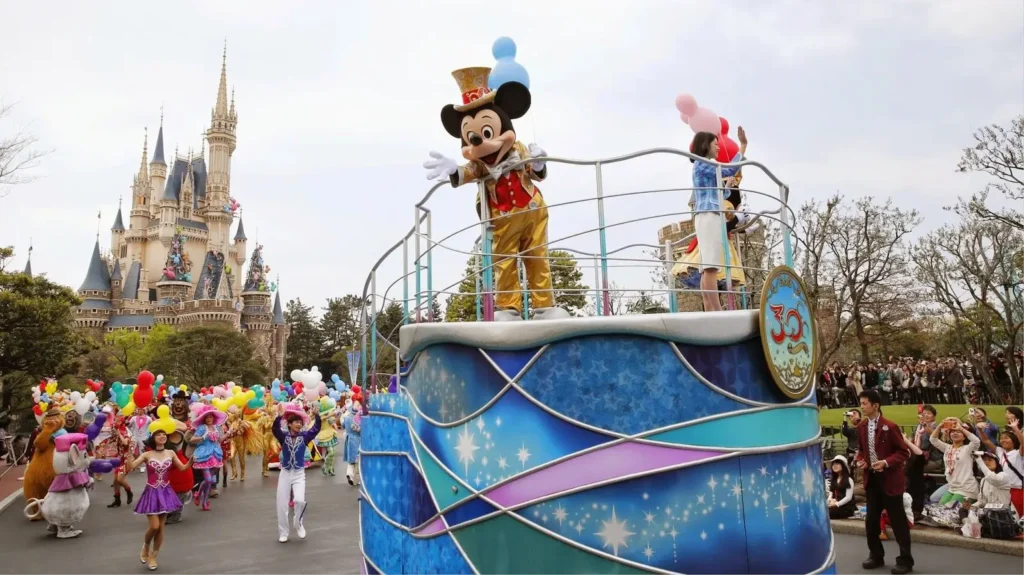
6) A “big-ticket fun day” (theme park or Disney – commit and enjoy)
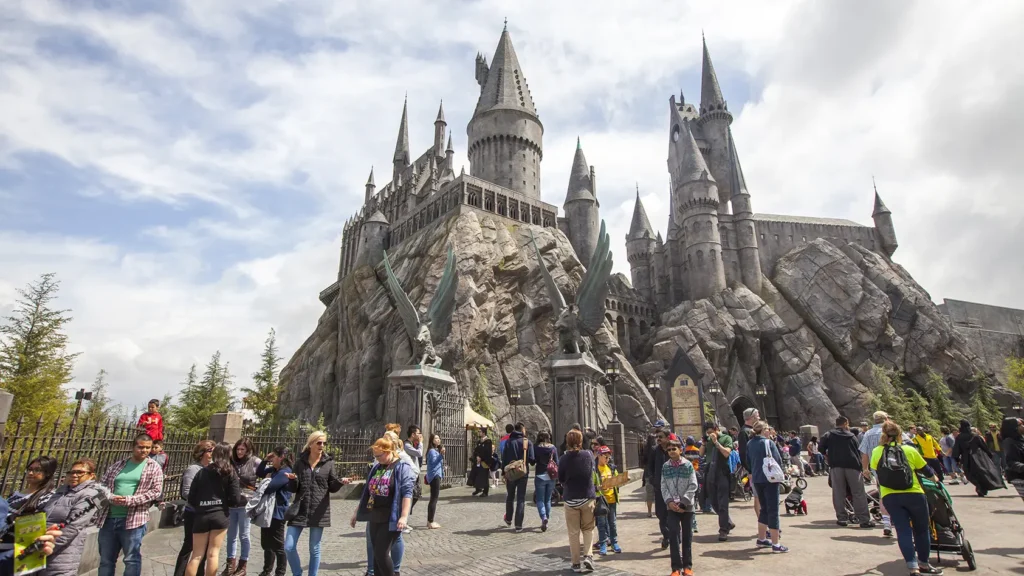
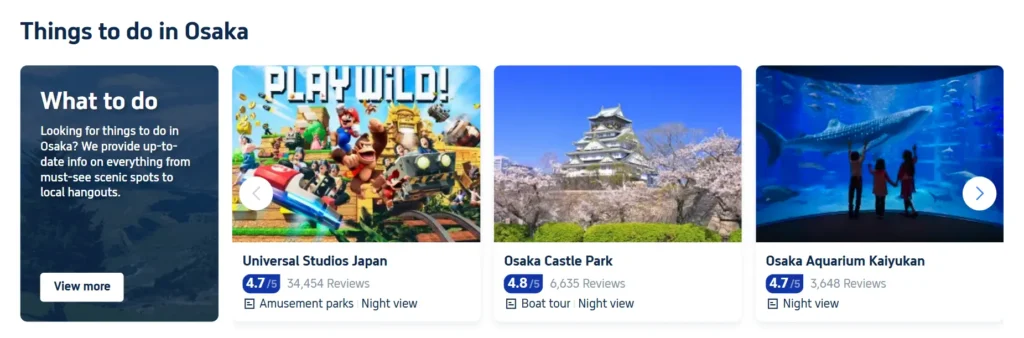
If you’re traveling with friends, family, or your inner child: a theme park day can be the highlight. Osaka’s Universal Studios Japan is a classic.
Want a curated list of bookable experiences?
Tokyo tours & tickets | Kyoto tours & tickets | Osaka tours & tickets
Best Cities to Visit in Japan (and Where to Stay)
Tokyo (3–6 days): the “everything” city
Tokyo is a city of neighborhoods. That’s the secret. Don’t try to “do Tokyo” in one list -pick areas, enjoy the vibe, and let the city unfold.
Best for: first-timers, food lovers, shopping, day trips, big city energy.
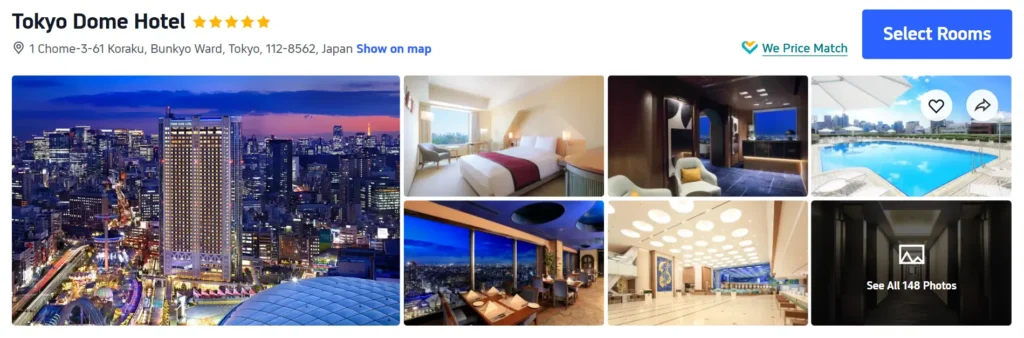
Book Tokyo hotels | Tokyo destination guide
Where to stay (simple picks):
- Shinjuku for convenience + transport + nightlife.
- Shibuya for trendy energy + shopping + easy exploring.
- Asakusa / Ueno for a more local feel and a calmer base.
- Ginza / Tokyo Station area for a polished, central base (great for day trips).
If Japan travel is your first time, stay near major stations to save time and avoid stressful transfers.
Kyoto (2–4 days): temples, old streets, and quiet magic
Kyoto hits different. It’s slower, softer, and full of small moments: a lantern-lit alley, a tiny coffee shop, a shrine you didn’t plan to visit.
Best for: culture, temples, history, photogenic streets, tea vibes.
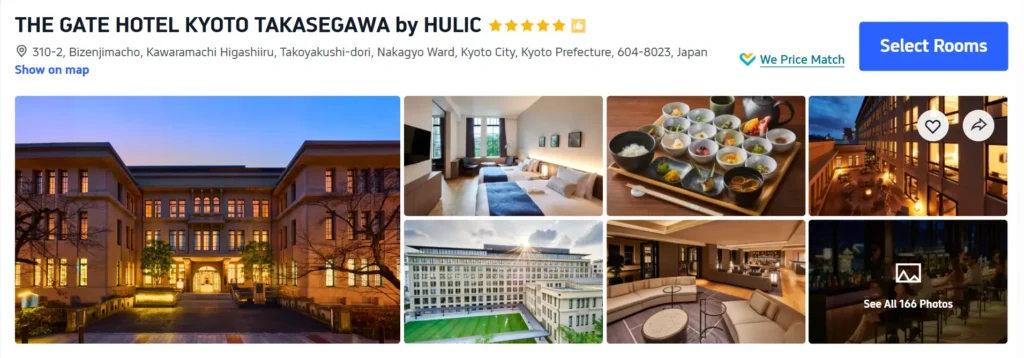
Book Kyoto hotels | Kyoto destination guide
Where to stay (simple picks):
- Gion / Higashiyama for atmosphere (walkable classics).
- Kyoto Station area for maximum convenience and day trips.
- Downtown (Kawaramachi) for food, shopping, and easy transit.
Osaka (2–3 days): the food capital with easy day trips
Osaka feels friendly and alive. It’s the place where you stop being careful and start having fun.
Best for: street food, nightlife, Universal Studios, Nara day trip.
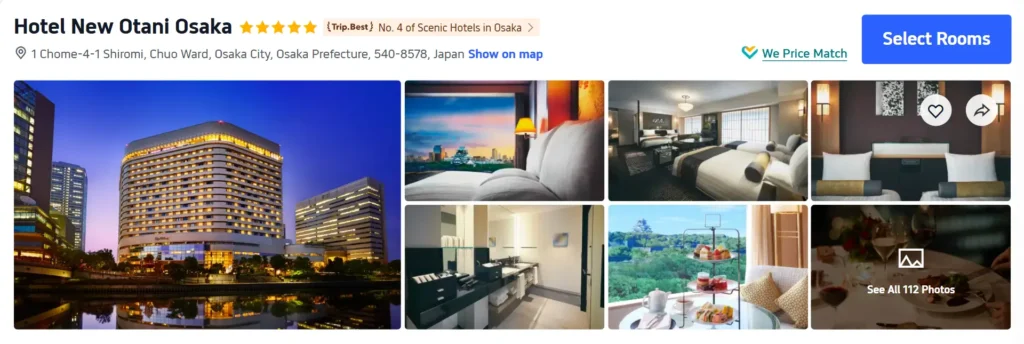
Book Osaka hotels | Osaka destination guide
Where to stay (simple picks):
- Namba for food + nightlife + central energy.
- Umeda for a clean, convenient base (great transport).
Bonus add-ons (when you have extra days)
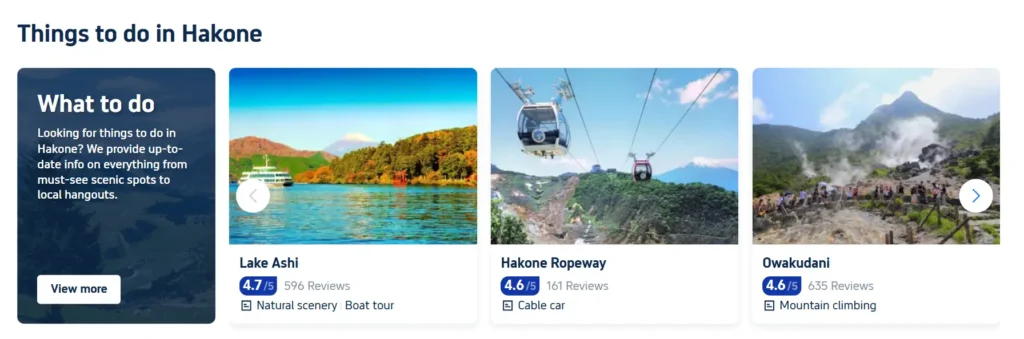
- Hakone for hot springs + mountain air (perfect reset day). Hakone hotels
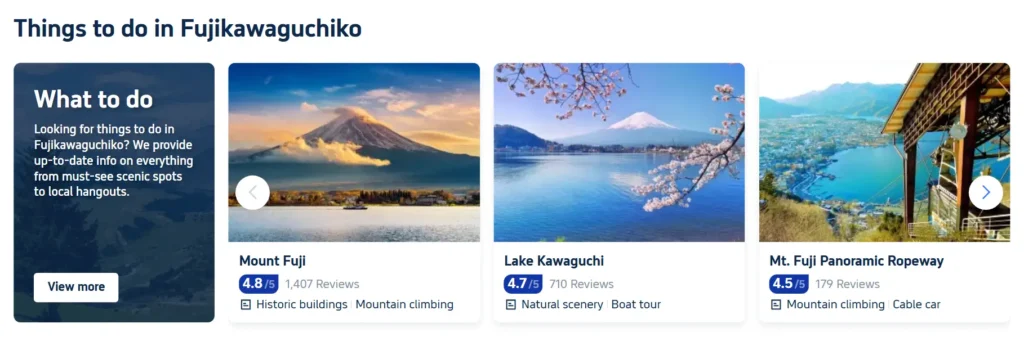
- Fujikawaguchiko for that iconic Fuji view + lakeside calm. Fujikawaguchiko hotels
- Nara for an easy day trip with famous parks and temples. Nara hotels
- Hiroshima for history that stays with you. Hiroshima hotels
How to Get Around Japan (Without Stress)
Arriving in Japan
Most first-timers fly into Tokyo (Narita or Haneda) and build the trip from there. That’s the easiest route to plan, and it gives you the most flight options.
Getting from the airport to your hotel
Tokyo’s airport connections are solid, but if you’re landing late, traveling with family, or carrying real luggage (not the Instagram kind), pre-booking a transfer removes a lot of friction.
Tokyo airport transfer options
What actually works for transport
- IC cards (Suica/PASMO style) make city travel easy—tap in, tap out, and stop thinking. If you prefer mobile, Welcome Suica Mobile is an option on iOS. Welcome Suica Mobile (JR East)
- Trains are the backbone. In big cities, they’re usually faster than taxis.
- Shinkansen (bullet train) is perfect for Tokyo ↔ Kyoto/Osaka style routes.
- Domestic flights can be a time-saver if you’re adding far regions.
- Smart luggage strategy: pack lighter than you think, or use luggage-forwarding services when switching cities.
One planning move that saves time at the airport
Japan’s official Visit Japan Web service can help with arrival procedures (immigration/customs) and tax-free shopping registration. If it applies to your situation, setting it up before you fly can make arrival smoother.
Visit Japan Web (official info)
Best Time to Visit Japan (Quick, Realistic Guidance)
- Spring (late March – April): cherry blossoms, mild weather, high demand. Book earlier than you think.
- Summer (June – August): festivals and long days, but hot and humid in many areas.
- Fall (October – November): comfortable weather, autumn colors, excellent city + nature balance.
- Winter (December – February): crisp air, fewer crowds in many cities, great for hot springs and seasonal food.
My honest tip: don’t chase “the perfect month.” Pick your vibe (city/culture vs. nature/hot springs vs. theme parks) and book the route that matches it.
How Much Does Japan Cost? (Simple Budget Reality)
Japan can be surprisingly flexible. You can do it on a reasonable budget—especially if you plan your base cities well and don’t switch hotels every night.
| Style | What it feels like | Typical daily spend (per person) |
|---|---|---|
| Budget | Simple hotels, trains, convenience-store breakfasts, a few paid attractions | $70–$130 |
| Mid-range | Comfort hotels, great food, a couple tours/tickets, some taxis | $140–$260 |
| Comfort+ | Better hotels, nicer dining, private transfers/tours, splurge experiences | $280+ |
Money-saving move that still feels good: stay near major transit, walk more, and spend your “splurge” budget on 1–2 experiences you’ll remember forever (a view, a day trip, a theme park, a ryokan).
Japan Travel Itineraries You Can Copy (5, 7, 10, 14 Days)
For Japan travel, a simple base plan beats overplanning: Tokyo, Kyoto, Osaka, then one day trip.
5 Days: Tokyo (with one perfect day trip)
- Day 1: Arrive, easy neighborhood dinner, early night.
- Day 2: Asakusa + Sensō-ji, then Shibuya/Harajuku vibe walk. Sensō-ji
- Day 3: Markets + shopping + skyline view. Shibuya Sky
- Day 4: Day trip (Fuji/Hakone/Kamakura—choose your vibe). Tokyo day trips
- Day 5: Slow morning, last gifts, fly out.
7 Days: Tokyo + Kyoto (best first-time combo)
- Days 1–3: Tokyo highlights + neighborhoods + one big view.
- Days 4–7: Kyoto temples + old streets + Fushimi Inari + Kiyomizu. Fushimi Inari | Kiyomizu-dera
Kyoto hotels | Kyoto tours & tickets
10 Days: Tokyo + Kyoto + Osaka (the “I want everything” route)
- Days 1–4: Tokyo + one day trip.
- Days 5–7: Kyoto (culture heavy, slower pace).
- Days 8–10: Osaka for food + nightlife + Nara day trip.
Osaka hotels | Osaka tours & tickets
14 Days: Tokyo + Kyoto + Osaka + Hakone/Fuji + a bonus city
- Days 1–5: Tokyo (including a day trip).
- Days 6–9: Kyoto.
- Days 10–12: Osaka + Nara.
- Days 13–14: Hakone hot springs OR Fujikawaguchiko for Fuji views.
Japanese Food (Quick Guide for First-Timers)
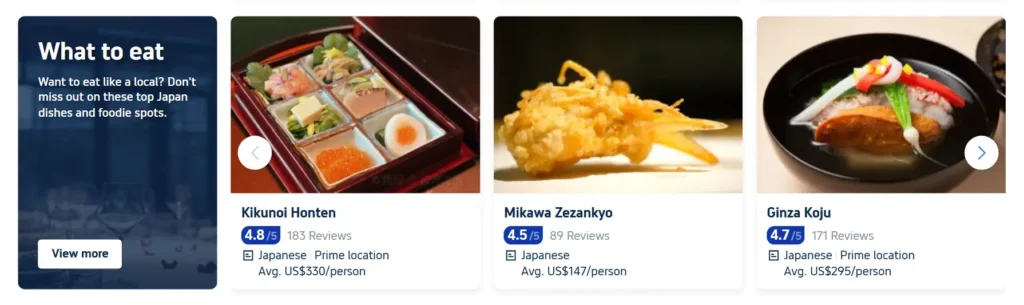
Japan is the kind of place where food becomes part of the itinerary – even if you didn’t plan it. Keep it simple: try ramen on your first night, do one casual sushi meal, and save one “Osaka food night” for takoyaki + okonomiyaki (messy, delicious, unforgettable). In Kyoto, slow down for matcha + sweets and a market snack crawl – small bites add up fast.
If you want the easiest win, book one food tour early in the trip. It removes the guesswork, shows you what to order, and suddenly you feel confident everywhere you eat:
Japan Travel Tips That Save Real Headaches
- No tipping (most of the time): It’s not common in Japan, and trying can create awkward moments. JNTO tipping guidance
- Bring a little cash: you’ll still find cash-only moments, especially at small shops.
- Quiet public transport: keep calls low-key and the whole country feels calmer.
- Escalator rule of thumb: you’ll often see people stand left in Tokyo and stand right in Osaka – just follow the flow.
- Onsen etiquette: rinse first, keep towels out of the water, and check tattoo rules at each place.
- Emergency numbers: Police 110, Fire/Ambulance 119, Coast Guard 118. Yokohama city emergency guidance
- Stay connected from day one: maps + translation + train apps become your superpower.
Japan eSIM options: Compare Japan SIM/eSIM plans | Japan 5G eSIM (QR code) example
Book Your Japan Trip (Fast Links That Make Planning Easy)
- Flights: Cheap flights to Japan
- Hotels: Tokyo | Kyoto | Osaka | Hakone
- Tours & tickets: Tokyo | Kyoto | Osaka
- Airport transfers: Tokyo transfers
- Japan planning hub: Japan destination guide
Final Choice Help (If You’re Stuck)
If you tell me (1) how many days you have and (2) whether you want more city/culture or more relaxed/onsen, I’ll turn this into a tight itinerary with the best booking flow (flights → hotels → key tickets/tours) so it’s easy to execute.
Quick recommendation for most first-timers: Tokyo + Kyoto + Osaka, with one day trip. It’s the smoothest route, and it delivers “different Japan every day” without chaos.
Japan Travel FAQ (Quick Answers for First-Timers)
How many days do I need for Japan?
For Japan travel, 7–10 days is the sweet spot. You’ll have time for Tokyo + Kyoto + (optional) Osaka without rushing. If you have 14 days, add Mt. Fuji/Hakone and one bonus city (Nara or Hiroshima).
What’s the best Japan itinerary for first-timers?
A simple winning route is Tokyo (3–5 nights) + Kyoto (2–4 nights) + Osaka (2–3 nights) with one day trip to Mt. Fuji/Hakone or Nara. It’s efficient, varied, and easy to book.
Where should I stay in Tokyo for the first time?
If you want the easiest base, choose Shinjuku (transport + nightlife) or Shibuya (trendy + walkable). For a calmer vibe with a traditional feel, Asakusa/Ueno works great.
Book Tokyo hotels
Where should I stay in Kyoto for the first time?
For the classic Kyoto atmosphere, stay in Gion/Higashiyama. If convenience matters most (day trips, early trains), stay near Kyoto Station. For food and shopping with great access, pick Downtown (Kawaramachi).
Book Kyoto hotels
Tokyo vs Kyoto vs Osaka — how should I split my nights?
Most first-timers enjoy Tokyo (4) + Kyoto (3) + Osaka (2) on a 9-night trip. If you love temples and slow mornings, shift a night from Osaka to Kyoto. If you love nightlife and shopping, give Tokyo an extra night.
Is the Japan Rail Pass worth it?
It depends on your route. If you’re doing multiple long-distance shinkansen trips in a short window, a pass can make sense. But for many first-timer routes (Tokyo-Kyoto-Osaka), individual tickets are often competitive, especially if you book and plan efficiently. If you’re unsure, decide after you finalize your cities.
What’s the easiest way to travel between Tokyo and Kyoto/Osaka?
The easiest and most comfortable option is the shinkansen (bullet train). It’s fast, frequent, and removes a lot of travel stress compared to flying + airport transfers.
What’s the best time to visit Japan?
For comfort and “wow” scenery, spring (late March–April) and fall (October–November) are top picks. Spring is peak demand because of cherry blossoms, and fall is loved for crisp weather and autumn colors-so book hotels early.
How expensive is Japan per day?
Japan can be flexible. Many travelers spend around:
- Budget: $70–$130/day
- Mid-range: $140–$260/day
- Comfort+: $280+/day
Your biggest cost levers are hotels, long-distance transport, and theme parks/tickets.
Do I need cash in Japan?
Cards are widely accepted, but cash still helps, especially for small restaurants, local shops, and some temple areas. Carry a bit of cash and you’ll avoid the “payment surprise” moment.
Do I need an eSIM or pocket Wi-Fi in Japan?
If your phone supports it, an eSIM is the easiest setup -you’ll want data for maps, transit, and translation from day one.
Browse Japan SIM/eSIM options
Is Japan good for families or first-time international travelers?
Yes. Japan is clean, organized, and safe-feeling for most travelers. If you plan your bases near transit and don’t switch hotels too often, it’s one of the easiest “big” trips you can do.
What are the most popular attractions in Japan?
Arashiyama Sagano Romantic Train | Arashiyama | Tokyo Disneyland | Universal Studios Japan | Osaka Aquarium Kaiyukan | Jozankei Onsen | Fukuoka Tower | Dazaifu Tenmangu | Port Of Nagoya Public Aquarium | Arima Onsen | Kobe Suma Seaworld | Hakone Ropeway | Kamakurakōkō-Mae Station | Yokohama Hakkeijima Sea Paradise | Yokohama Landmark Tower
What are the most popular restaurants in Japan?
Mikawa Zezankyo | Kyoto Kitcho Arashiyama | Beige Alain Ducasse Tokyo | Takoyasu | Ichiran Shimbashi | Joël Robuchon | Kagurazaka Ishikawa | Shiseido SALON de Café | Mo Mo Paradise Kabukicho Bokujo | HYOTEI | Ogata | agnel d’or | Sushizanmai | Quintessence | Florilège
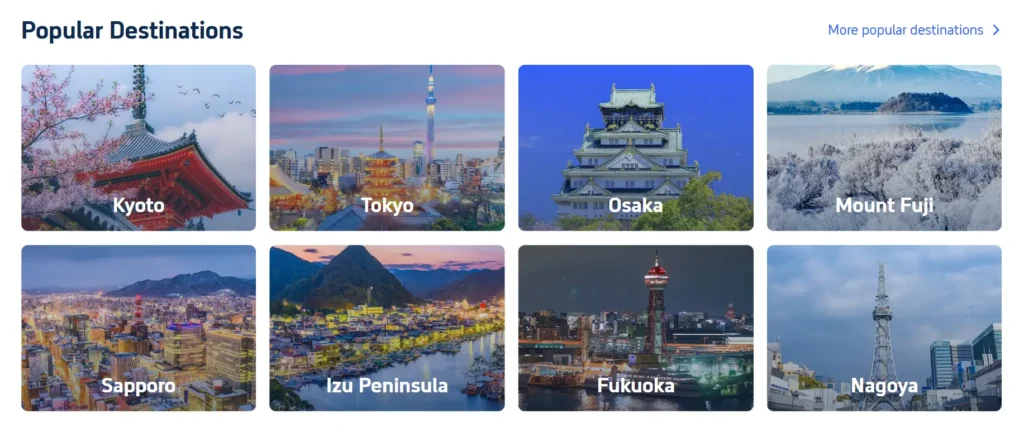
Japan Travel Hubs (Quick Links)
- Luxury stays: Top 50 Luxury Hotels in Japan
- Must-do list: Top 50 Best Things to Do in Japan
- With kids: Top 20 Family Hotels in Japan
- After dark: Top 50 Night Attractions in Japan
- Best views: Top 50 Scenic Hotels in Japan
- Family fun: Top 50 Family-friendly Attractions in Japan
- Stay with culture: Top 50 Cultural Hotels in Japan
- Winter trip planning: Top 50 Ski Resorts in Japan
- Photo-worthy picks: Top 50 Instagrammable Hotels in Japan
- Onsen experiences: Top 50 Hot Springs Attractions in Japan
- More space: Top 50 Vacation Homes in Japan
- Onsen stays: Top 50 Hot Spring Hotels in Japan
More TripArx Guides to Keep Planning
Keep the momentum going with these quick, copyable guides.
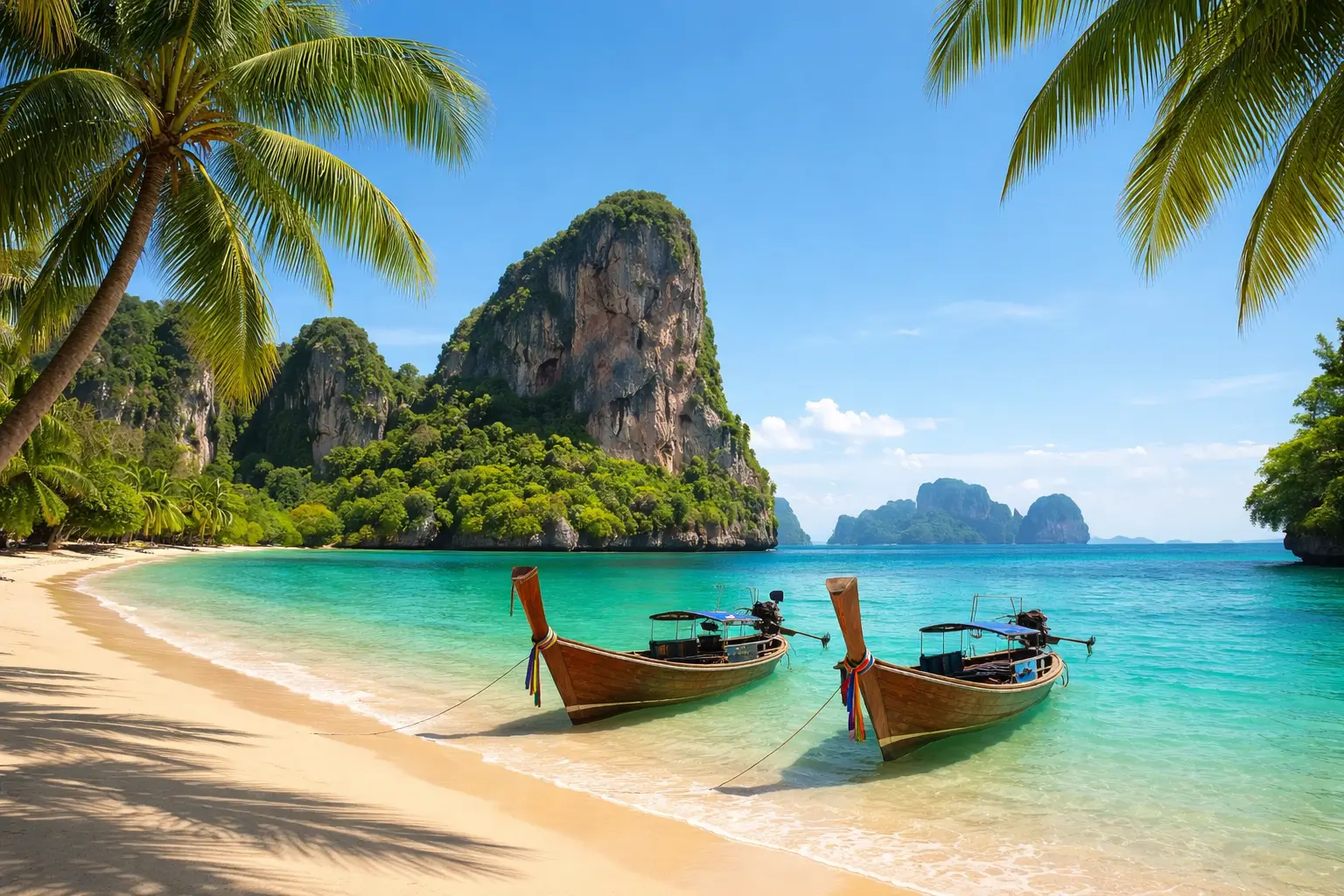
- Thailand Travel Guide: Best Places, Itineraries & Wellness Retreats – best places, itineraries, and wellness-friendly picks.
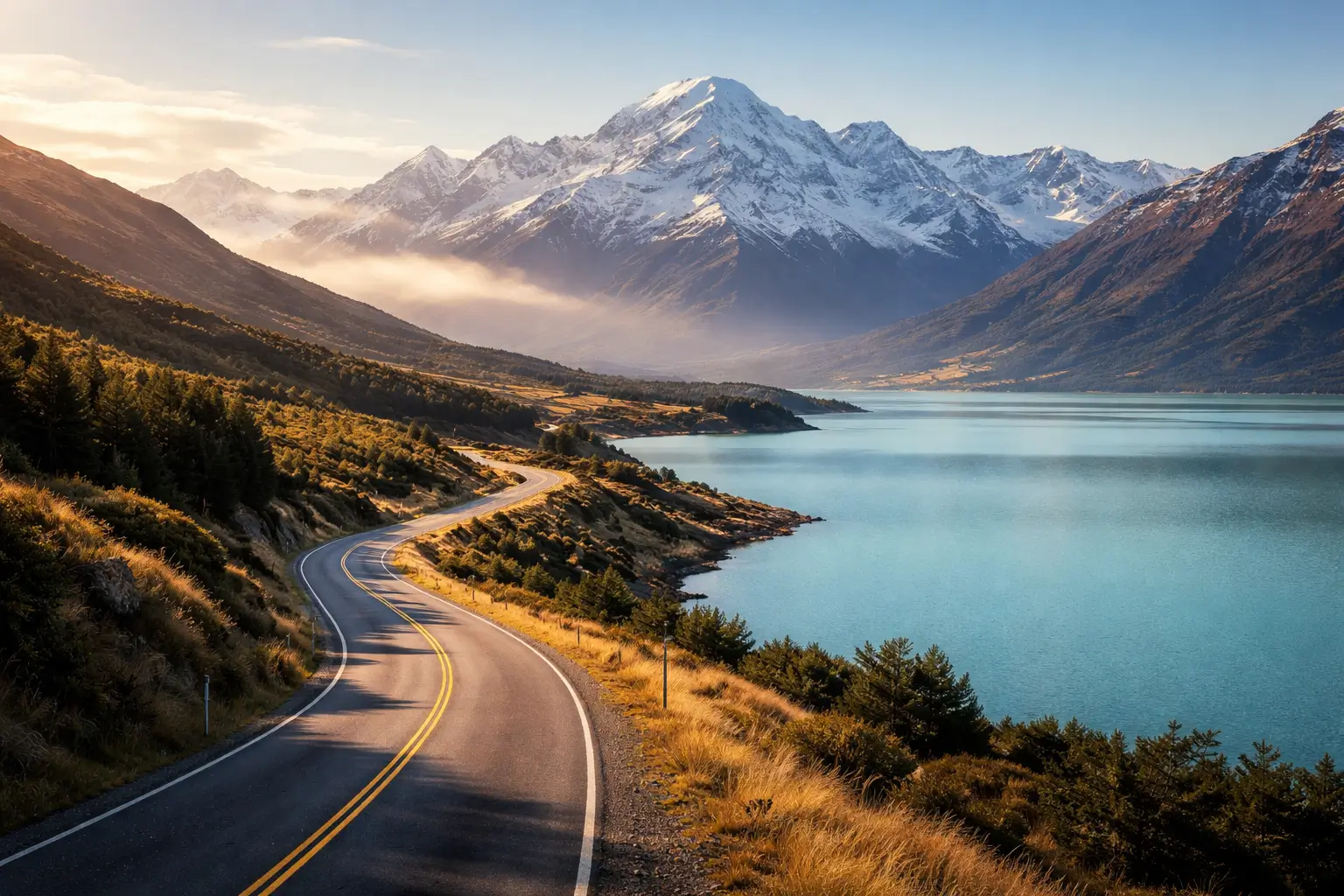
- New Zealand Travel Guide: North vs South + Itineraries – north vs south planning with copyable itineraries.
- Barcelona Gaudí Itinerary: What to See + Where to Stay – a Gaudi-focused plan with where to stay.
- 48-Hour Budapest Itinerary: Food, Photos & 2 Nights Under $1500 – a tight 48-hour city plan you can copy.
- Ziplining in Costa Rica: Best Places + Tours Worth Booking – the best zipline spots and tours worth booking.
- Simien Mountains Hike, Ethiopia: First Trek Tips – first-trek tips for an epic hiking trip.
- Tokyo Travel Guide: Best Areas + Easy Itineraries – where to stay, what to book, and easy day plans.
- Discover the Power of Wise Card for Travelers’ Savings
- Why NordVPN Is the Best VPN for Security, Privacy & Travel