


Most homeowners make one big safety mistake: they treat alarms like invisible appliances until they chirp. The kidde hardwired smoke and carbon monoxide detector deserves attention now because it pairs smoke and CO sensing in a single 5-inch unit and includes a 10-year built-in battery so you won’t be swapping cells every year. Is ignoring a combined detector for convenience a risk you want to take?

This 4-pack is built for whole-home coverage: living rooms, hallways, kitchens, and bedrooms. It uses an electrochemical sensor for CO and enhanced smoke sensing to cut down on false alarms from cooking. Add voice alerts that announce “Fire!” or “Warning Carbon Monoxide!” and you get clarity when every second counts.
Key Features & Real-World Use
- 2-in-1 detection – smoke plus carbon monoxide sensing reduces the need for separate devices and saves wall and ceiling space.
- 10-year built-in lithium backup – powered by 120V AC wiring with an internal battery for the life of the detector, so you avoid annual battery swaps.
- Voice alerts & LED indicators – clear spoken warnings and interconnectable LED lights help identify the hazard and its location.
- Enhanced sensing tech – tuned to reduce nuisance alarms commonly caused by cooking or steam without sacrificing safety.
- Easy installation – twist-and-click mounting bracket, compatible with standard junction boxes and typical household wiring.
- Safety certified – designed and tested to current UL standards for reliability and performance.

How to Choose
Three quick criteria that matter and the trade-offs to expect.
- Power type – hardwired with battery backup offers continuous power and low maintenance; battery-only models are simpler to install but need frequent replacement.
- Interconnectability – wired interconnect ensures that every unit sounds together; wireless models can be easier for retrofit but may need repeaters.
- Sensor quality – electrochemical CO sensors are more accurate than older tech; optical or photoelectric smoke sensors reduce cooking false alarms.
- Installation complexity – if you have attic access and basic wiring skills, hardwired units are straightforward; otherwise, budget for an electrician for safe hookup.

Quick Setup & Use
- Turn off power at the breaker and remove the old detector if present.
- Mount the twist-and-click bracket to the junction box using the supplied screws.
- Connect the 120V AC wires using standard wire nuts – match line, neutral, and interconnect leads per the manual.
- Attach the detector to the bracket with a quarter-turn until it clicks, then restore power.
- Press the test/self-test button to verify voice alerts, LED warning lights, and interconnect signals across units.
- Maintain by lightly vacuuming vents every 6 months and running the self-test monthly.
Buyer Doubts Solved
Worried about wiring? A licensed electrician can install hardwired detectors in under an hour in most homes; the bracket and clear labeling simplify the process for pros.
Concerned about false alarms? The enhanced sensing targets common nuisance triggers like kitchen smoke and steam to keep alerts meaningful.
What about battery life? The built-in 10-year lithium backup is designed to last the detector’s service life so you’ll avoid yearly battery chores.
Compatibility with other units? These are interconnectable and designed to work across the same model line for whole-house alerts.
Is it bulky or noisy? The clean 5-inch form factor fits modern ceilings, and voice alerts offer intelligible warnings rather than ambiguous chirps.
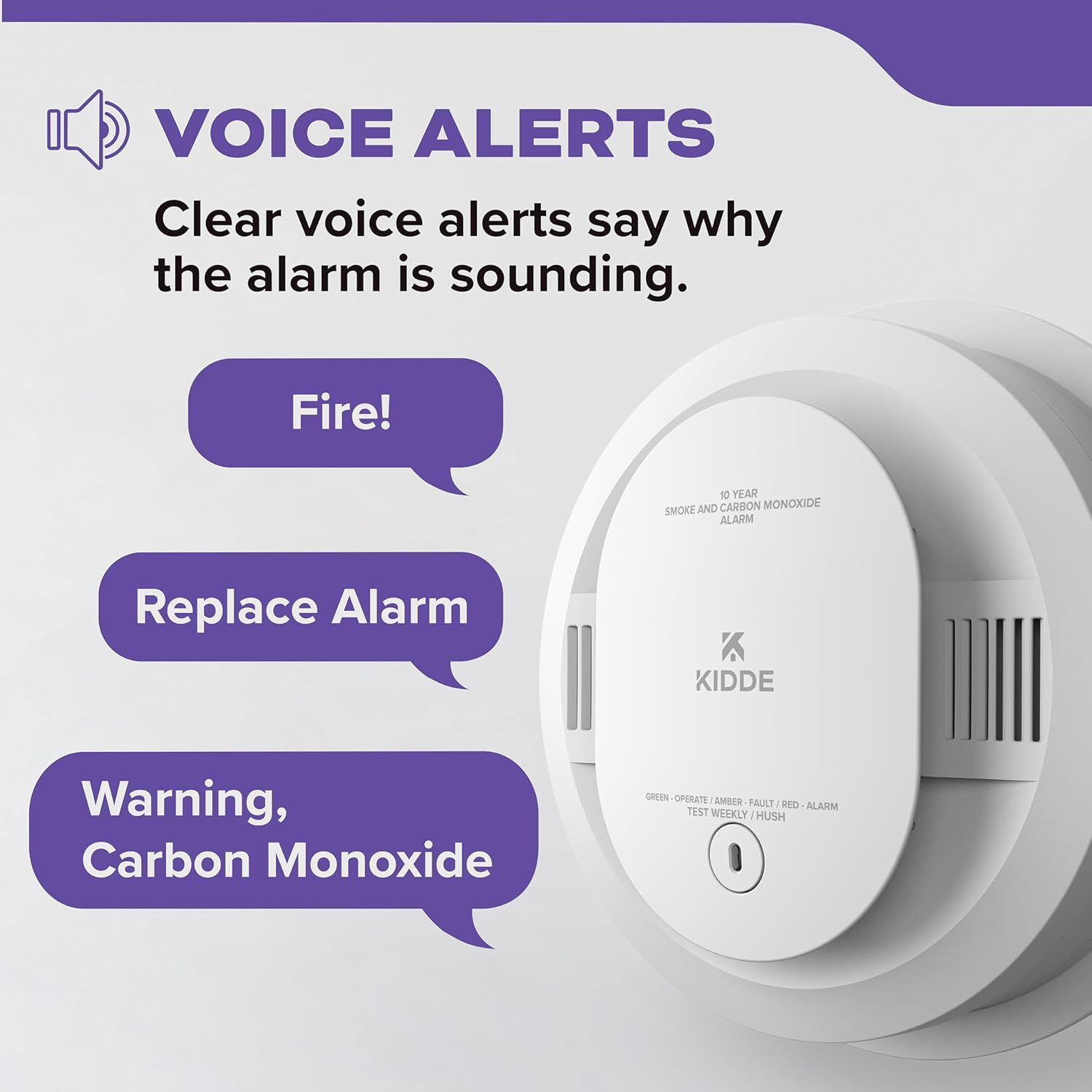
Putting 2-in-1 detectors with voice alerts and interconnectable LEDs in key rooms replaces guesswork with clarity. Install the 4-pack to cover bedrooms, hallways, and common areas and get reliable, low-maintenance protection.
Some links are affiliate. As an Amazon Associate, I earn from qualifying purchases – at no extra cost to you. It helps keep these finds coming. Thanks for your support!