
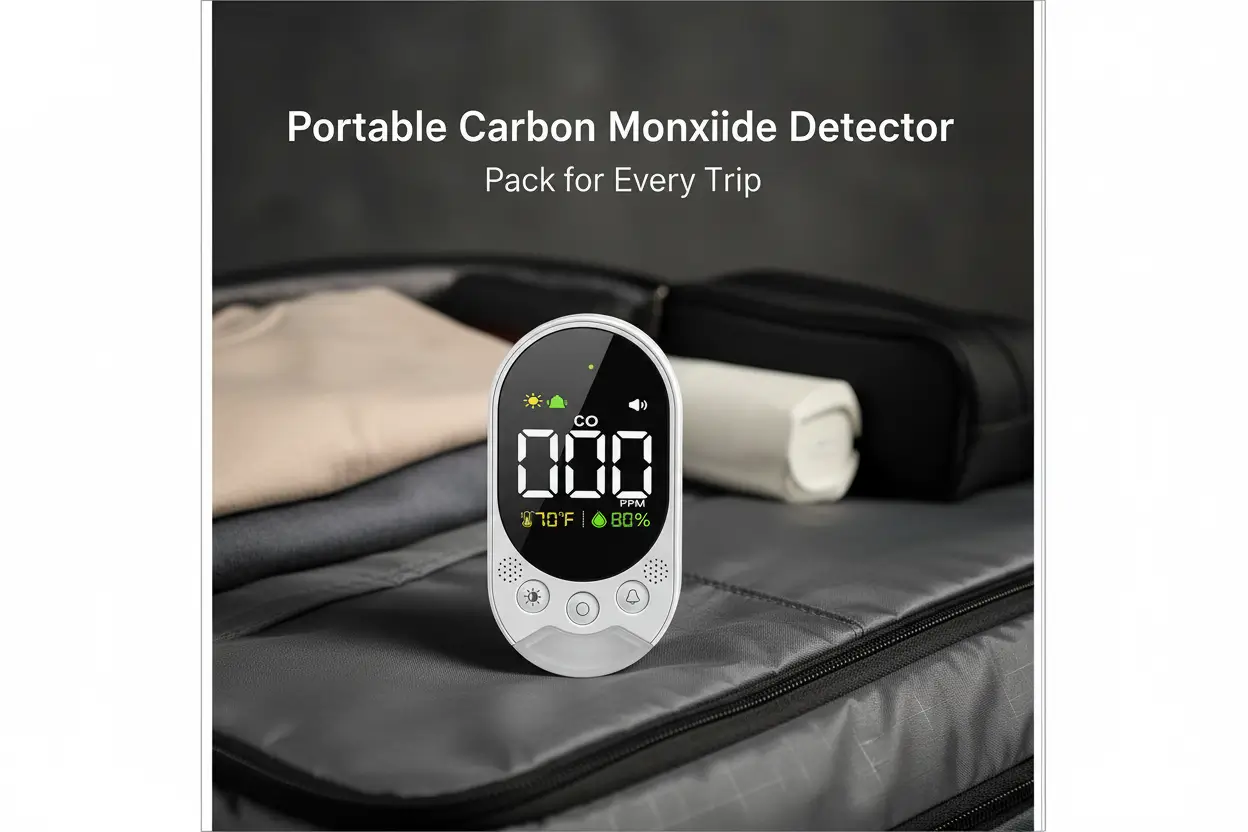

I never travel without a portable carbon monoxide detector after a stupid mistake on a 10-day road trip where I trusted hotel ventilation to do the job. The device I now pack shows real-time CO concentration and also tracks temperature and humidity on a bright, high-contrast screen, which is shockingly useful in tiny rental rooms.
On that trip I spent 1 night feeling off and chalked it up to travel fatigue. Turns out, a faulty heater was the likely culprit. Since then I look for a compact CO alarm that fits in a backpack or carry-on and doesn’t require complicated wiring. Who wants unnecessary risk and a bulky gadget when you’re sleeping in unfamiliar places?

Why This Earned a Spot in My Bag
If you travel like I do – hostels, Airbnbs, road trips, and the occasional sketchy motel – you want something small, reliable, and low fuss. This plug-style detector is one of those rare pieces of gear that feels essential but barely takes space. I toss it in my tech pouch or a side pocket of my daypack. It’s TSA-friendly in the sense that it’s compact and carry-on friendly, and it doesn’t add noticeable weight to my backpack or suitcase.
I use it when I’m staying somewhere with a space heater, near enclosed garages on road trips, or when a building smells like stale gas. It’s also handy in summer when humidity and temperature swings make small rooms feel stuffy – the display helps me spot those trends fast. For digital nomads who set up in short-term rentals, it’s a quick safety check before you plug in your laptop and sleep soundly.
The Details That Matter On the Road
What convinced me wasn’t marketing speak but a set of travel-ready details. Here’s what I actually care about and what this little unit delivers:
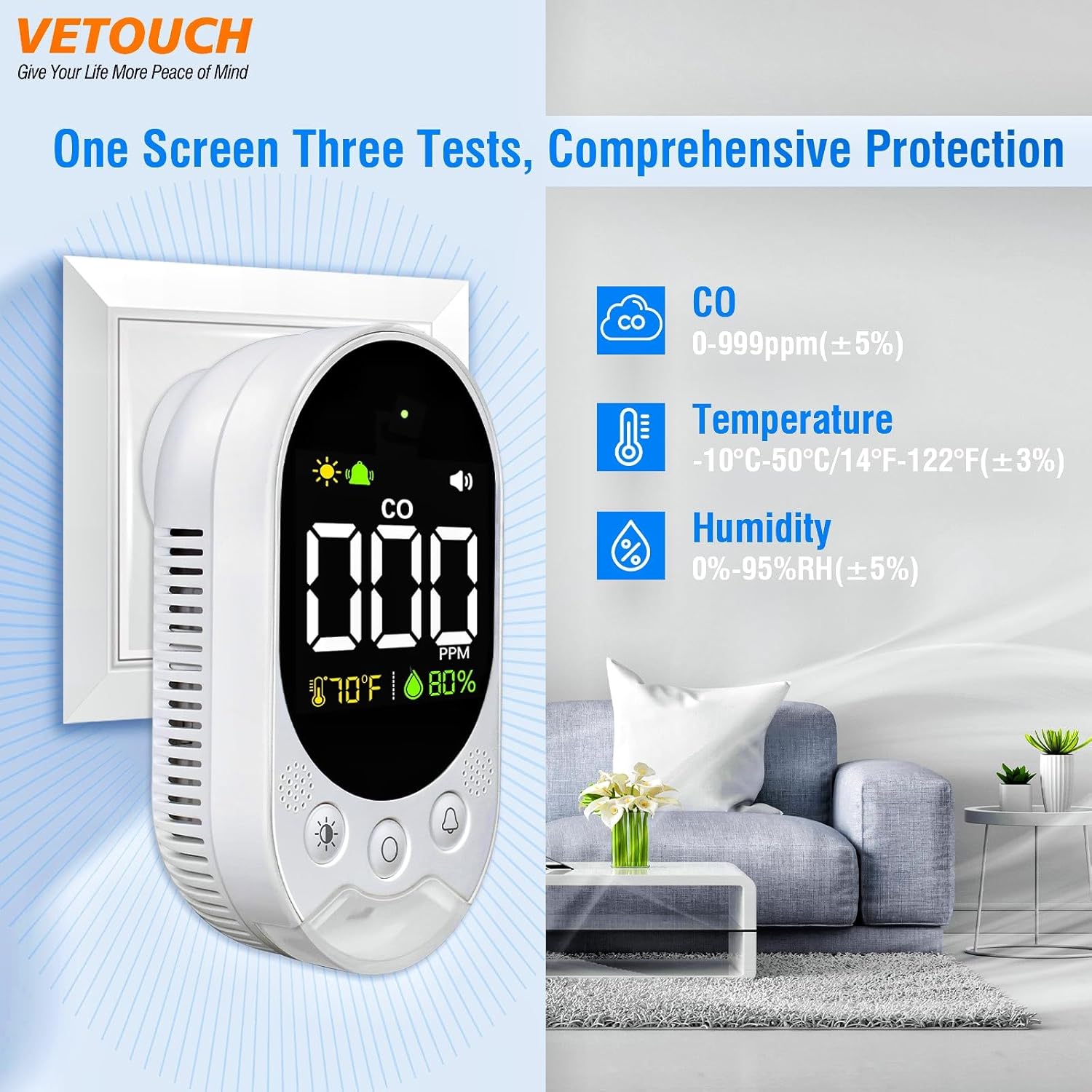
- 3-in-1 environmental monitor – CO concentration plus temperature and humidity on one clear screen, so you get context, not just an alarm.
- High-contrast digital display – readable from across a small room or in dim hostel dorms; that visibility matters when you’re half asleep and panicked.
- Graded warning system – it shows CO readings rather than only beeping, so you can tell if something’s trending upward and act before it gets worse.
- Plug-in form factor – compact, no cables to pack, and no bulky battery compartments to worry about in your backpack.
- Simple maintenance – no complicated setup, which I appreciate more than a fancy finish; I inspect it visually and test it occasionally before long trips.

Mistakes I See Travelers Make With This Type of Gear
- Skipping one entirely – I used to assume hotel alarm systems covered CO. They don’t always, and portable coverage matters in rental properties and older buildings.
- Packing the wrong size – people reach for bulky detectors that are heavy or that won’t fit an outlet near the bed. Pick a compact plug-in model so it’s actually usable.
- Ignoring temperature and humidity – environment affects comfort and equipment. A device that shows these readings can help you decide if you need ventilation, a dehumidifier, or to move rooms.
- Storing it in the bottom of a bag – if it’s buried, you won’t set it up. Keep it accessible in a tech pouch or the top of your carry-on.
- Assuming one beep means everything’s fine – graded warnings are useful. A steady trend up on the display is a cue to leave and ventilate even before an alarm sounds.
How I Actually Use It Day to Day
- Unpack and plug it into the wall near the sleeping area as soon as I arrive. The plug-in design eliminates carrying extra charging cables or batteries.
- Glance at the display to note the baseline CO, temperature, and humidity. If readings are high or trending up, I open windows and move rooms if possible.
- Keep it visible – I don’t hide it behind luggage or curtains since the high-contrast screen is meant to be read from a distance.
- Test it before multi-night stays. A quick visual check confirms the screen is working and that there’s no obvious damage to the housing or sensor area.
- When traveling by car, I plug it in at overnight stops near garages or enclosed parking to monitor any accidental exhaust buildup.
If You’re Hesitating, Read This
I had the same doubts. Would an extra gadget be worth the space? Would it be reliable? Here’s how those doubts played out for me.
- Quality concerns – I worried the sensor would be cheap. In practice, the clear digital readout and graded warnings made it far more informative than the one-time-beep alarms I owned before.
- Bulk and weight – it’s lighter than a guidebook and slimmer than most travel power bricks. It earned its spot because it doesn’t compromise my packability.
- Do I really need it? – if you stay in hotels only and stick to well-ventilated places, maybe less. But if you stay in rentals, older buildings, or use space heaters, it’s a travel safety upgrade I recommend.
- Trusting unknown brands – I prefer simple, functional gear. This unit’s straightforward display and easy setup beat flashy extras I never used.
- Maintenance worries – the device needs little upkeep. I visually inspect and test it occasionally, and it’s far less maintenance-heavy than most travel electronics.

If you want a low-hassle safety upgrade that doubles as a simple climate monitor, this unit is worth the space. For solo backpackers, road-trippers, and anyone staying in short-term rentals or older buildings, it’s a practical, packable piece of kit I now recommend to fellow travelers.
Some links are affiliate. As an Amazon Associate, I earn from qualifying purchases – at no extra cost to you. It helps keep these finds coming. Thanks for your support!