


I learned the hard way that one sticky night without a net costs me 12 mosquito bites and ruined sleep for two days. That’s why the portable mosquito hammock became non-negotiable in my kit after a humid weekend in the Everglades.
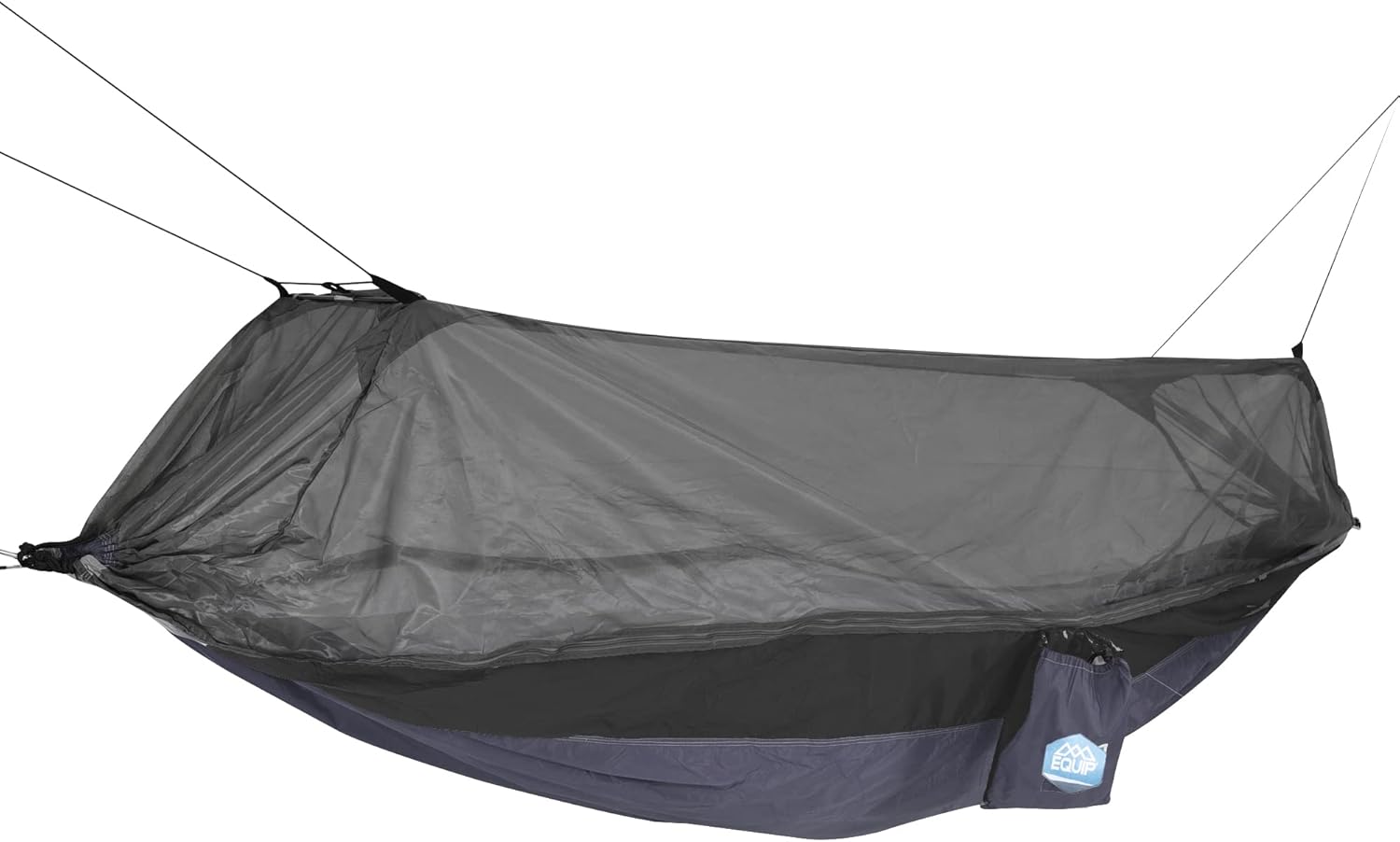
Right away: the hammock’s integrated bug net and included hanging kit meant I could set up a sleep system in under 5 minutes and stay visible to the sky without inviting bugs. Could a lightweight bundle really replace a bulky tent and still fit in my backpack?
Why This Earned a Spot in My Bag
If you travel light like I do — carry-on backpacks, hostel stays, and a few nights under stars — you want gear that pulls double duty. For me, the Equip Outdoors portable mosquito hammock checks those boxes: it’s a one-person shelter, a bug net, and a water-resistant lounge all in one small package.
I use it on quick camping trips, rainy festivals, beachside naps, and hostel courtyard hangs. It’s TSA-friendly because the whole thing stashes into a tiny integrated bag and fits into backpacks or suitcases without taking over hostel lockers. If you’re a solo hiker, a weekend road-tripper, or a festival camper, this is the kind of piece that stops you from choosing comfort or convenience — you get both.
The Details That Matter On the Road
- Material & build: Made from 100% nylon, the fabric is lightweight and packs small, but still feels durable enough for regular use in my backpack rotation.
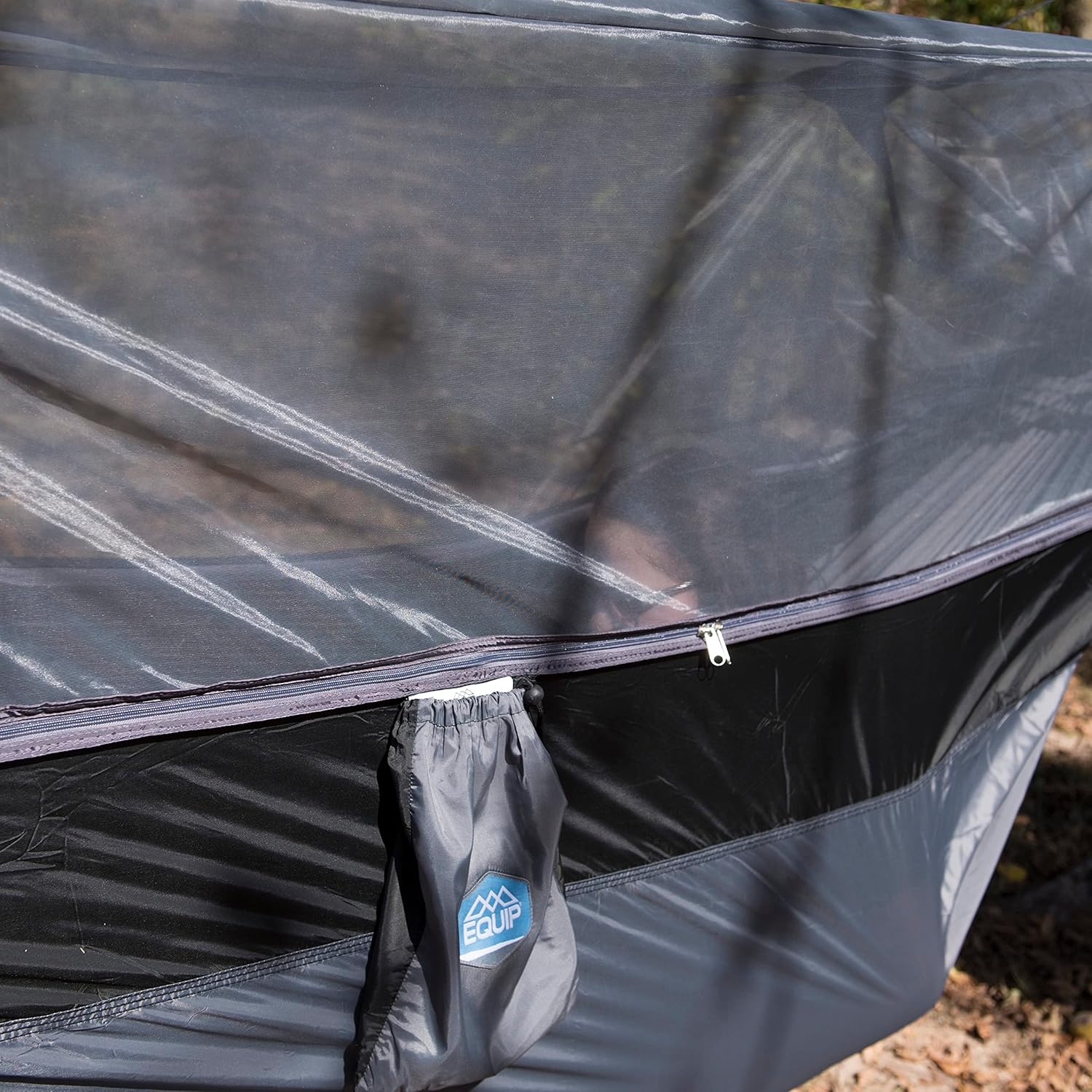
- Bug protection: The attached bug net is integrated, so there’s no fiddling with separate mesh. You get visibility and airflow while staying bite-free — essential in humid climates.
- Hanging kit included: Sturdy straps and carabiners come with the hammock, which means I don’t need to carry extra straps or tie-downs. Setup is fast and reproducible.
- Water-resistant fabric: Not a rainproof tent, but the water-resistant nylon gave me protection from light drizzle and morning dew, keeping my sleeping bag and gear drier than a raw tarp.
- Packability & weight: Packs into an integrated bag that fits easily inside a daypack or under my airplane seat. It’s about as backpacker-friendly as a sleeping platform gets.
How I’d Choose Between Similar Options
When I compare mosquito hammocks, these are the criteria that actually matter to me. I weigh trade-offs based on where I’ll sleep.
- Use case first: If I’m sleeping in rainy, tree-heavy terrain, I prioritize water resistance and a reliable hanging kit over ultralight weight. For desert festivals, ventilation and bug netting top the list.
- Packability vs durability: Ultralight nylon is great for carry-on and long hikes, but I check the seams and stitching. A slightly heavier fabric is worth it if I’m rough on gear.
- Inclusion of straps: A hammock that comes with a hanging kit saves me from packing extra webbing. If it includes carabiners and tree-friendly straps, that bumps it up for me.
- Closed system or modular: I prefer an integrated bug net to avoid losing pieces, but modular nets can let you swap for thicker or finer mesh depending on bugs in the area.
How I Actually Use It Day to Day
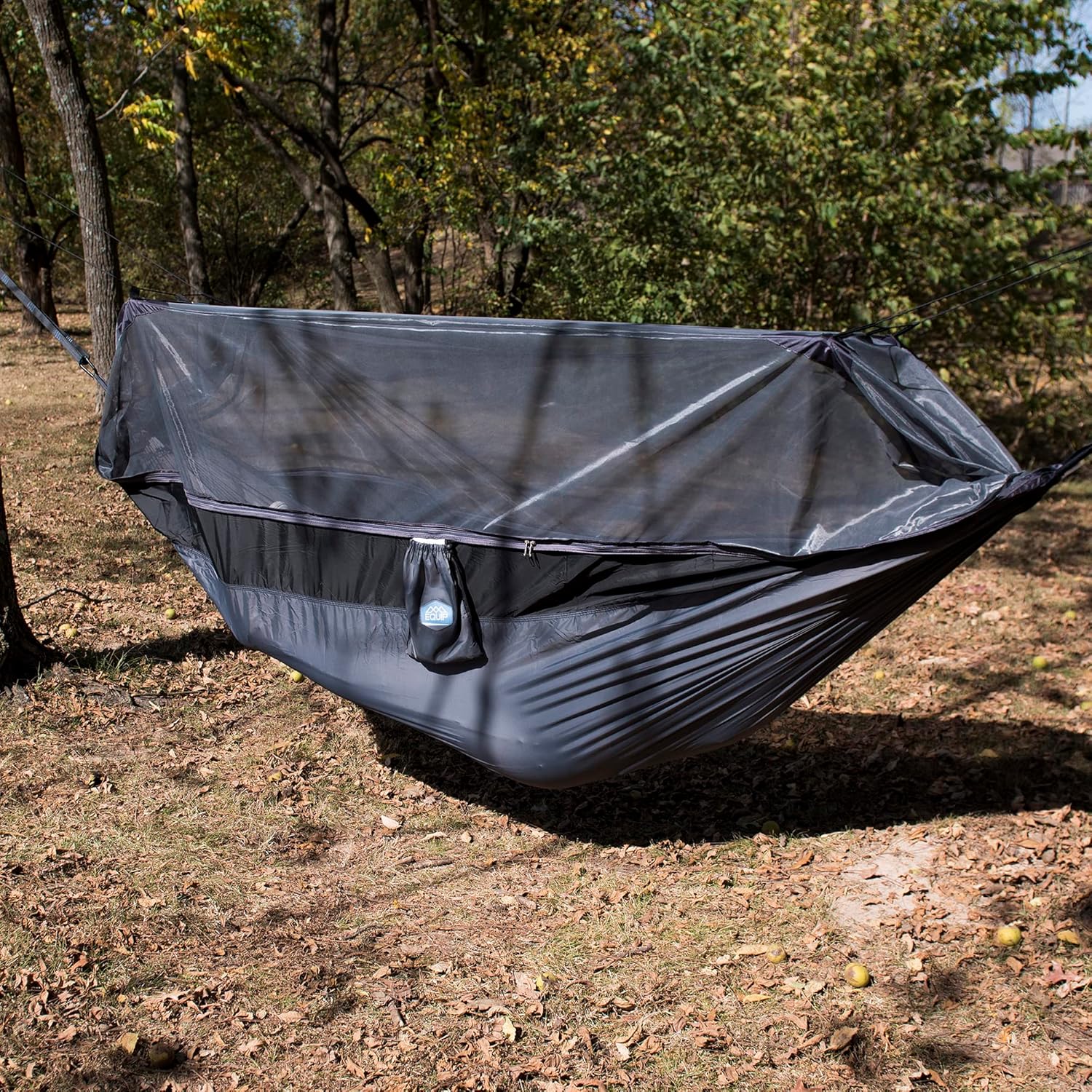
- Scout a pair of anchor points: I look for trees about 10-15 feet apart. If I’m near a campsite or a hostel yard, I check that straps won’t rub bark or damage property.
- Attach the hanging kit: The included straps and carabiners mean I clip in and tension the hammock in under 5 minutes. I bring a small strap to protect delicate bark when needed.
- Test the net: Before climbing in with my sleeping bag or pad, I zip the mesh and poke it gently to ensure there are no tears. Visibility through the net is great, so I can still stargaze.
- Pack smart: I keep small electronics and charging cables in an inner pocket or a dry bag, since the hammock is water-resistant, not watertight. I secure loose items in a gear loft or adjacent pouch.
- Maintenance after use: Shake out sand, let it dry before stuffing into the integrated bag, and inspect seams. A quick hand-wash if it’s muddy keeps it smelling fresh for hostels and small backpacks.
If You’re Hesitating, Read This
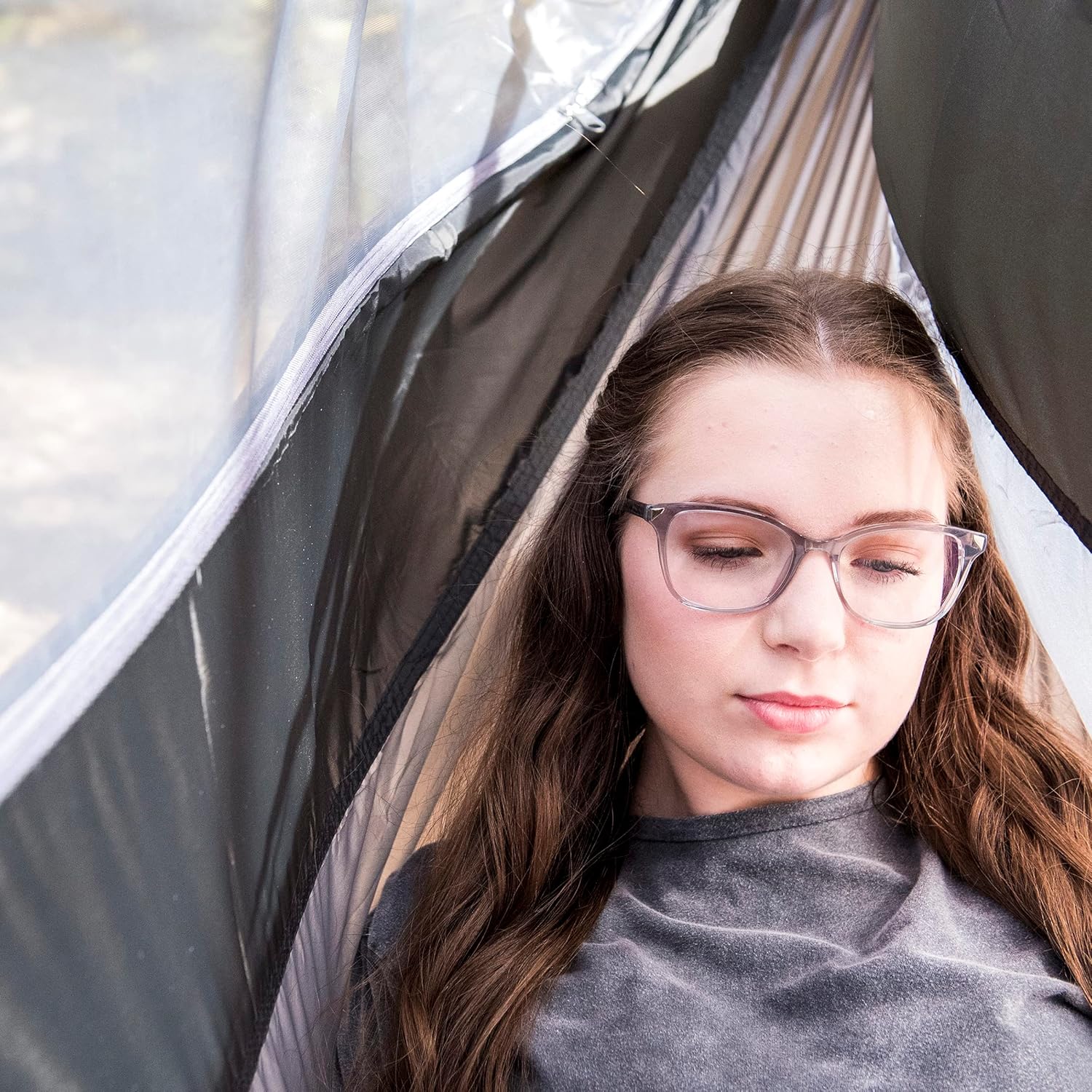
- “Is it just another gimmick?” I thought that too. After several nights, the integrated bug net and quick hang system proved far more reliable than juggling a separate net and tarp. It saved me from dozens of bites and restless sleep.
- “Will the nylon survive rough use?” The 100% nylon feels thin until you use it — the seams and stitching held up on tree branches and light abrasion. For heavy off-grid use, carry a small repair kit.
- “I don’t want to lug extra weight.” It’s not the lightest hammock on the market, but the hanging kit being included means I don’t pack extra straps. That trade-off works for me when packability and convenience count.
- “Is water resistance enough?” It’s water-resistant, not a full rainfly. In steady rain you’ll want a tarp. For dew, drizzle, and campground mist, it keeps you dry and comfortable.
- “Do I really need an integrated bug net?” If you sleep near water or in forests, yes. For desert or alpine trips where bugs are minimal, a simpler hammock may suffice.
For me, this portable mosquito hammock earns its place because it solves a real travel pain: sleeping bite-free without hauling a tent or separate net, while staying compact in my backpack. It’s ideal for solo campers, festival-goers, and anyone who wants a quick, packable shelter with bug protection and some weather resistance.
Some links are affiliate. As an Amazon Associate, I earn from qualifying purchases – at no extra cost to you. It helps keep these finds coming. Thanks for your support!