
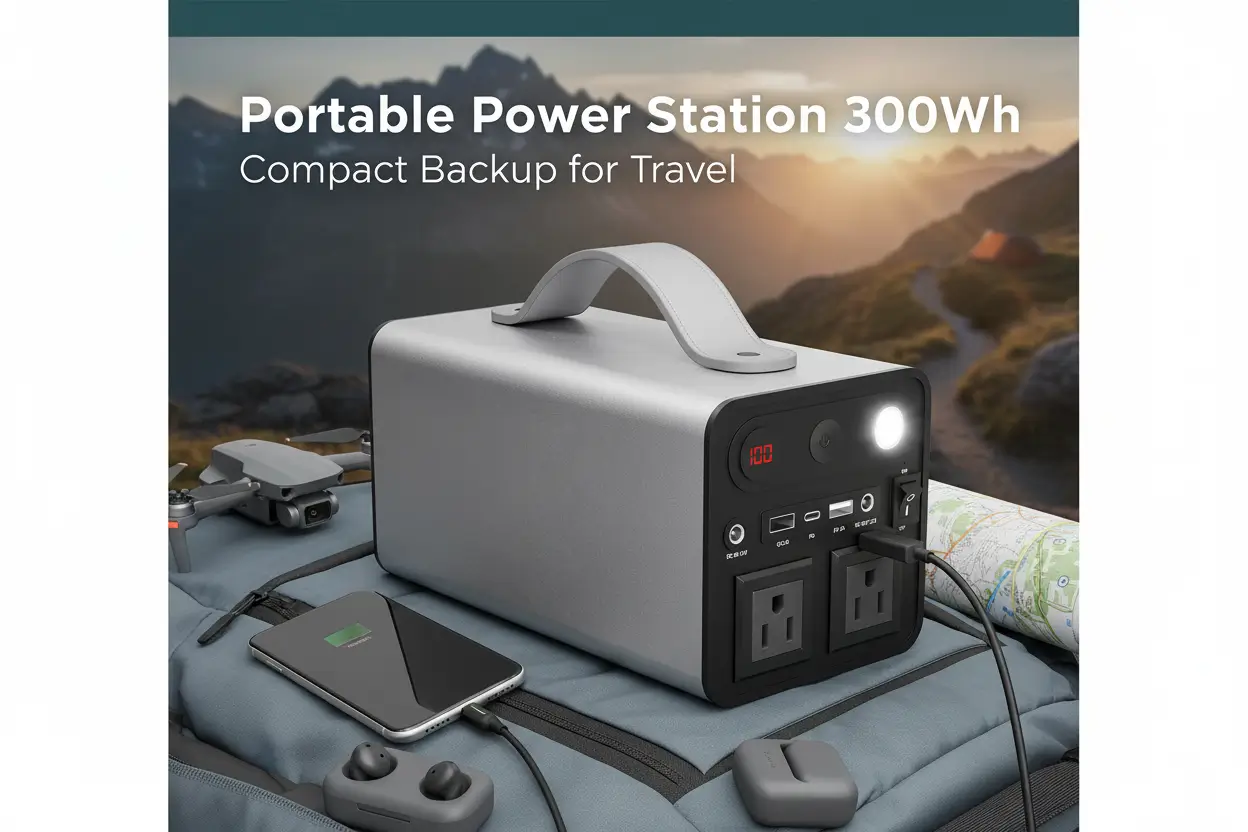

I learned the hard way that a portable power station 300wh isn’t luxury gear—it’s insurance. On a 48-hour road trip across the desert my laptop and phone were down to single-digit battery percentages within a day, and I lost nearly 6 hours of editing time waiting for a generator. That cost me a deadline and a whole lot of stress.
I packed this compact 299.7Wh/81000mAh unit on my next trip and the difference was immediate: two AC outlets, a USB-C port, USB-A ports, and a DC port meant I kept cameras, a laptop, and my phone topped up while camping, on long layovers, and working from noisy hostels. Want to avoid watching your work die mid-export or missing sunset shots because your battery’s gone?

Why This Earned a Spot in My Bag
If you travel like I do—mix of flights, long drives, camping, and freelance work—you want gear that’s compact, reliable, and easy to use. For me, this portable power station 300wh nails that brief. It’s small but powerful enough to run my laptop and charge phones for a couple of days when access to mains is patchy.
- Flights & layovers: I use it in lounges and long gate waits to top up multiple devices without hunting for scarce outlets.
- Road trips and car camping: It runs small fridges briefly, powers lights, and keeps camera batteries charged.
- Hostels and shared accommodations: I keep it locked in my backpack in a locker so I’m not leaving devices on shared tables all night.
- Emergency home backup: During power cuts it’s a quiet standby to charge essentials and keep a router alive for a few hours.
Key Features In Real Travel
I don’t care about fancy marketing lines. I care about what I can plug in and how long it lasts. Here’s what actually matters on the road.
- Capacity: The unit lists 299.7Wh (81000mAh). For me that translates to multiple phone charges and a laptop top-up, enough to get through a day or two of lightweight use without mains.
- AC outlets: Two 300W AC outlets with a 1200W peak lets me run small appliances and charge power-hungry devices without ridiculous adapters.
- USB and Type-C: Two USB-A ports and one 18W QC/Type-C port mean fast charging for phones, tablets, and smaller gadgets.
- DC port: Handy for certain camera rigs, small fridges, or accessories that still use barrel plugs.
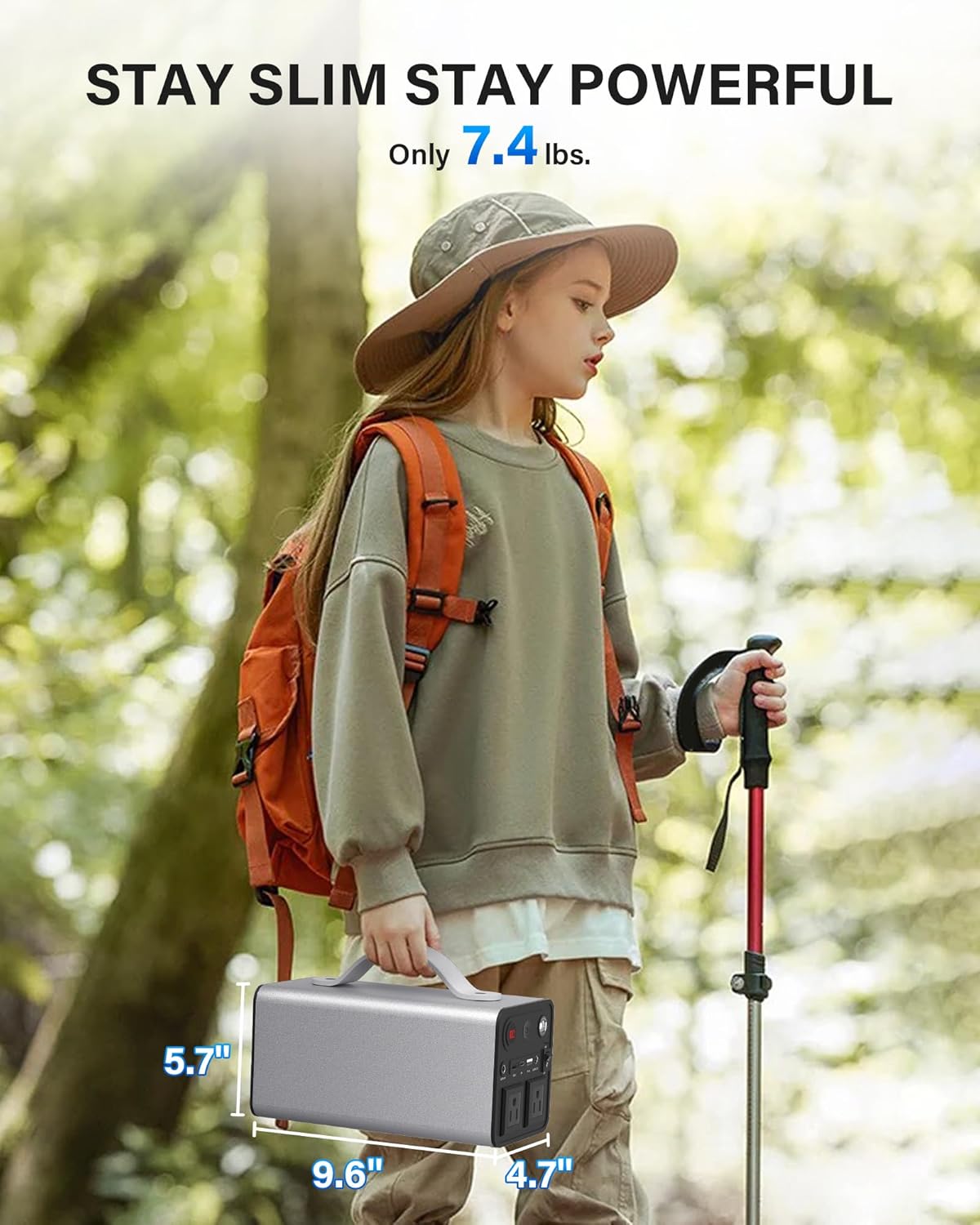
- Small but rugged: Market copy calls it small but powerful. In practice it’s compact enough for a backpack or checked luggage, with decent build that stands up to travel knocks and frequent plugging.
- Safety and stability: The pack is described as providing safe and stable performance, which for me means it never tripped devices and handled simultaneous loads without fuss.
Mistakes I See Travelers Make With This Type of Gear
Having used several power stations, I’ve watched people mishandle obvious things. Learn from others’ mistakes so you don’t repeat them.
- Assuming it’s TSA-friendly: I always check airline rules before flying with a battery this size. Many carriers restrict batteries over 100Wh in carry-on. Don’t assume—call your airline.
- Bringing the wrong cables: People forget DC or Type-C cables for specific cameras or fridges. I pack a small cable kit and a compact multi-connector adapter.
- Expecting it to run everything: A 300Wh station isn’t a house generator. Don’t try to run heavy appliances for long periods; know the power draw of your device.
- Leaving it drained: I’ve seen travelers leave these packs discharged for months. Store at partial charge and cycle occasionally to preserve battery health.
- Ignoring maintenance: Clean ports, avoid moisture, and don’t drop it in mud. A bit of care extends the unit’s usable life.

How I Actually Use It Day to Day
Practical routine beats fancy features. These are the steps I follow every trip.
- Step 1 – Plan my load: I list what I need to power – laptop (60-90W), phone (10-20W), camera chargers – and estimate hours. That prevents trying to run too much at once.
- Step 2 – Priority charging: I always top up phones and camera batteries first, then the laptop. Keeps essential comms alive while big charges happen later.
- Step 3 – Use the AC sparingly: AC is great but drains faster. For phones I prefer USB-C fast charging and reserve AC for laptops or appliances that need it.
- Step 4 – Carry smart: I keep it in an easy-access side of my backpack for layovers and use a luggage strap when moving between car and campsite. Packability matters in tight backpacks and suitcases.
- Step 5 – Maintain battery health: After long trips I recharge to around 50% before storing and cycle it every few months to preserve longevity.
If You’re Hesitating, Read This
These were the doubts I had before buying, and how they actually turned out on the road.
- “Is it too bulky?” It’s bigger than a single phone power bank, but small enough for a daypack or checked bag. For me, the trade-off of size versus reliable power is worth it.
- “Will it break in transit?” I treat it like camera gear—pad it and avoid tossing. Its build stood up to several trips without damage.
- “Do I really need AC outlets?” If you use a laptop, a DLSR battery charger, or small appliances, yes. AC ports make the unit far more flexible than USB-only banks.
- “Is it safe?” The product emphasizes stable performance. I still follow basic safety: keep it dry, don’t cover air vents, and don’t attempt repairs myself.
- “What about cables and adapters?” Bring the right cables and a small multi-tip kit. That’s the difference between a useful station and a paperweight.

In short: this unit earned a place in my kit because it balances real capacity (299.7Wh) with practical ports and portability. It’s for travelers who need reliable charging for laptops, cameras, phones, and small appliances on road trips, camping trips, or as an emergency home backup. If you value durability, packability, and predictable charging, it’s worth considering.
Some links are affiliate. As an Amazon Associate, I earn from qualifying purchases – at no extra cost to you. It helps keep these finds coming. Thanks for your support!