
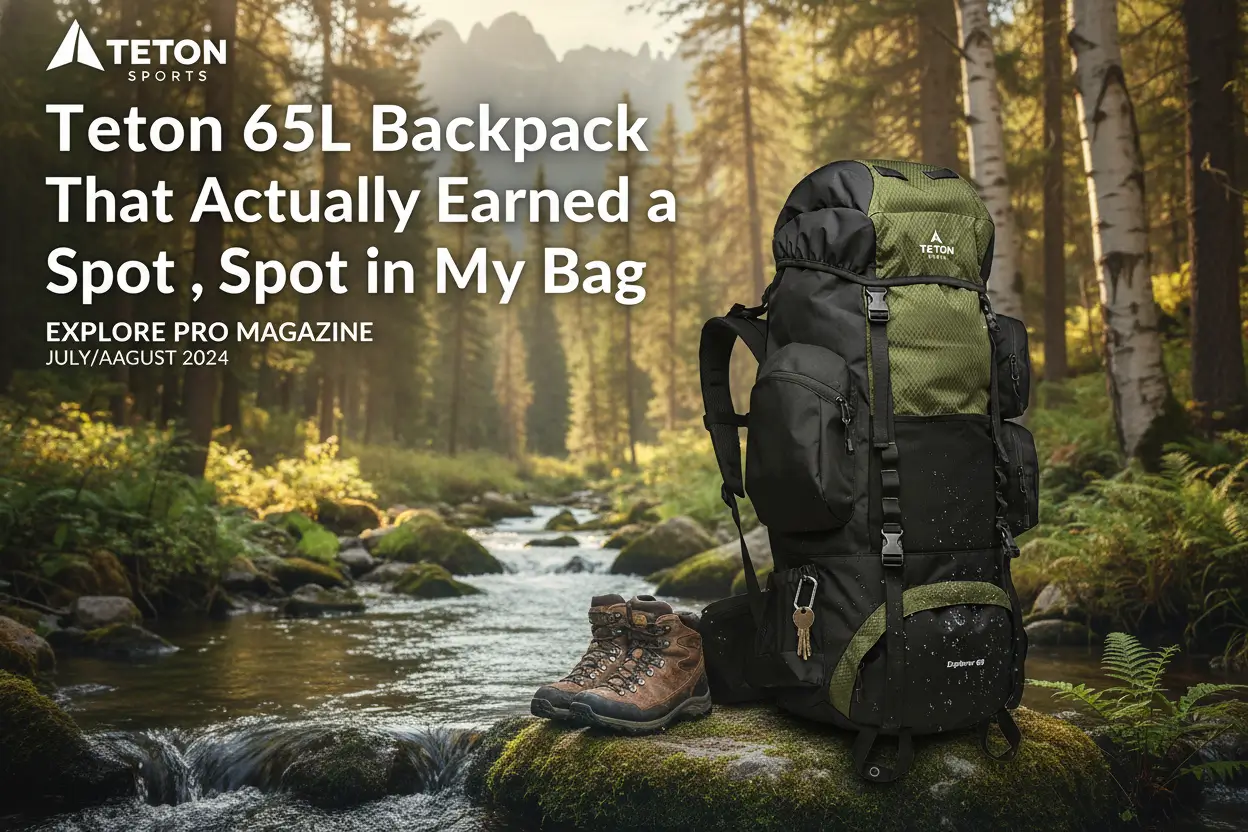

I learned the hard way that not all big packs are built for real trails. On my first multi-day slog with a heavy load I switched to the teton 65l backpack and noticed a difference by day 2: my shoulders stopped screaming and my hips started doing the work they were meant to do. I carried roughly 30 pounds for 7 days through rocky trails and rainy alpine passes and the pack never felt like it was working against me.
It’s a weird mix of affordable and surprisingly competent: internal frame, adjustable back panel, and an integrated rain cover that actually keeps gear dry. For me, once a pack makes a 7-day trip feel less punishing, it becomes mandatory gear. Ready to see if this is the one you should pack next?

Why This Earned a Spot in My Bag
If you travel like I do – a mix of backpacking, hostel nights, and occasional car-camping – the fit matters more than flashy features. The Teton Explorer’s internal frame and adjustable back panel actually match a variety of torso lengths, which means on long hikes the weight sits on my hips instead of hammering my shoulders. I’m not saying it’s a miracle, but after switching packs mid-trip I suddenly had energy left for evening hikes.
Who it makes sense for: people doing 2-10 day treks, budget-minded backpackers who still want durability, and travelers who rotate between trailheads and budget hostels. It’s less about ultralight minimalists and more for anyone who wants a dependable, comfortable bag for extended wear without spending a fortune.
The Details That Matter On the Road
I’m picky about materials, zippers, and how a pack handles bad weather. Here’s what sold me on this pack in real travel terms:
- Internal frame and adjustable back – The frame gives structure for heavy loads and the back panel adjusts so it fits my torso without feeling like I’m carrying someone else’s backpack.
- Integrated rain cover – It tucks away neatly and saved me from damp sleeping bags on at least two rainy mornings. Waterproofing isn’t absolute, but this keeps a soaked day from wrecking your gear.
- Comfort and load distribution – Padded shoulder straps and a decent hip belt shift weight where it belongs. I noticed less shoulder fatigue after day 1 on steep climbs.
- Durability and materials – The fabrics and stitching stood up to rocks, branches, and hostel hooks. Not indestructible, but solid for repeated travel use.
- Packability and pockets – Big main compartment for tents and clothes, plus sensible access for smaller items. It won’t replace a suitcase for business travel, but it’s excellent for trail-focused trips and multi-destination backpacking.

How I’d Choose Between Similar Options
Choosing a pack feels like picking hiking boots: fit and use-case trump flashy specs. When I compare similar backpacks I look at three practical criteria:
- Fit range: Does the back panel adjust to my torso? A pack that fits you will save hours of misery.
- Frame type: Internal frame for heavier loads and stability; if you’re carrying tents, stove, and food for several days, you want that structure.
- Weather protection: Is there an integrated rain cover or is the fabric water-resistant? An affordable dedicated cover beats hoping fabric repels a downpour.
The Teton 65L backpack ticks these boxes for me: adjustable fit, internal frame for stability, and a rain cover that actually gets used.

Quick Setup Before You Hit the Trail
I treat every pack like a system. Here’s the routine that kept my gear organized and comfortable:
- Step 1 – Adjust the back panel at home: Measure your torso roughly and set the panel so the hip belt rides on your iliac crest. It saves time and blisters on day one.
- Step 2 – Pack heavy items low and close to the frame: Sleeping bag and stove go at the bottom or inner compartment; food and water centered near the back for balance.
- Step 3 – Use the rain cover early: If skies look gray, deploy the cover before the drizzle starts. It’s small but effective and stows away without bulk.
- Step 4 – Keep essentials accessible: Map, headlamp, snacks in the top or external pocket so you don’t unpack each time.
- Step 5 – Tighten straps on the go: Shoulder straps, sternum strap, and hip belt should be tuned between flats and climbs to avoid fatigue.
Buyer Doubts I Had (And How They Played Out)
If you’re hesitating, I get it. These were my exact concerns and how reality stacked up:
- Is it too bulky? I worried 65 liters would be overkill. In practice I used the extra space for group gear and trial-and-error layers. If you usually carry under 15 pounds, a smaller pack may suit you better.
- Will the materials hold up? I expected thin fabric at this price. After months of trail use the stitching and fabric showed normal wear but no failures. Treat it like any pack – don’t drag it over rocks every time – and it will last.
- Does the rain cover actually work? Short answer: yes. It kept my sleeping bag dry on at least two heavy showers. It’s not a substitute for dry sacks, but it’s reliable for sudden weather.
- Fit for different body types? I was worried it wouldn’t fit my partner. The adjustable torso range made it fine for both of us—just take a minute to set it right.
- Is it travel-friendly off-trail? It’s not TSA carry-on sized for most airlines, but for road trips, camping shuttles, and backpacking, the pack works great. If you need airport carry-on compliance, check dimensions before you fly.

In short: I pack this one when I want a reliable, structured bag that handles multi-day trips, bad weather, and hostel transfers without drama. It’s ideal for weekend warriors, budget backpackers, and anyone who wants a sensible, comfortable 65-liter pack that really performs out on trail.
Some links are affiliate. As an Amazon Associate, I earn from qualifying purchases – at no extra cost to you. It helps keep these finds coming. Thanks for your support!