
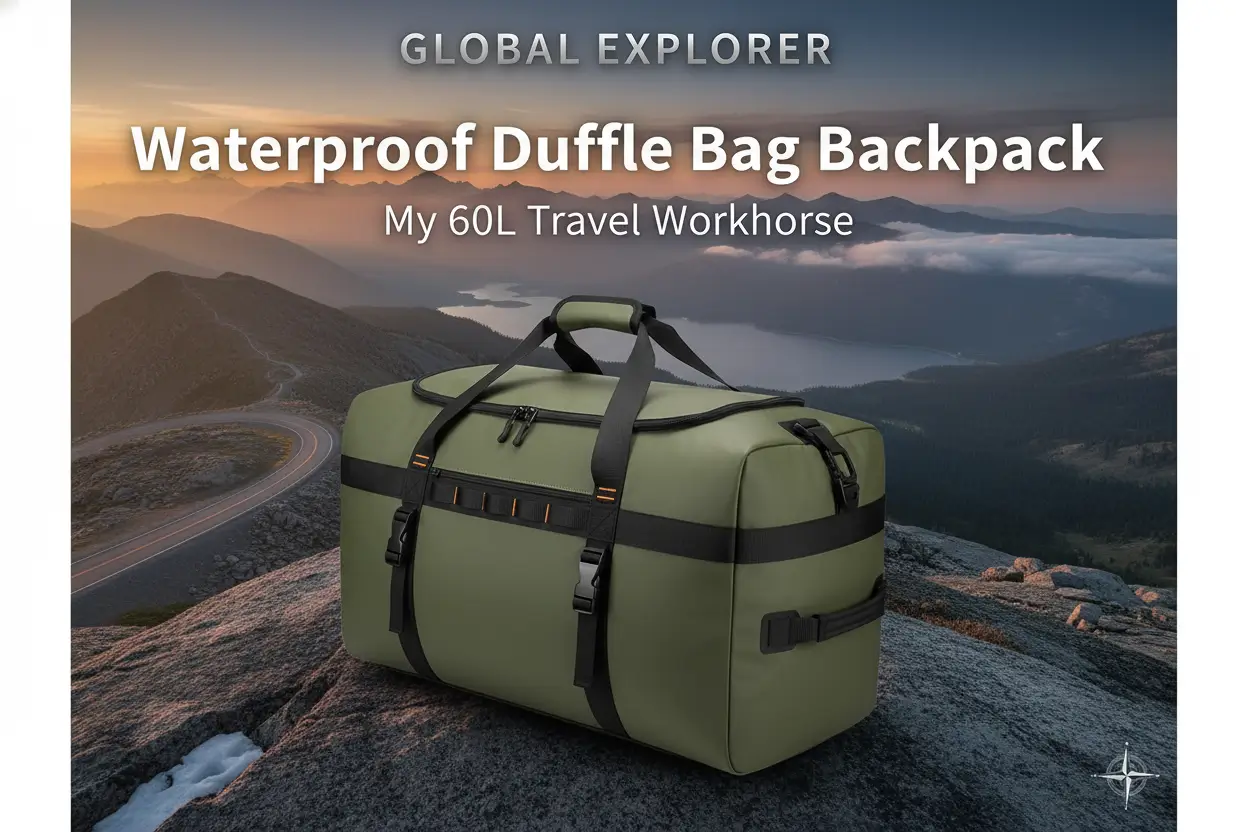

I learned the hard way: on my third rain-soaked trip my cheap nylon duffle let everything inside get damp. Since then I travel with a waterproof duffle bag backpack and I haven’t had to salvage soggy socks again.
I’m talking about a 60L option that actually fits 3-8 days of gear or bulky sports equipment without turning into a second suitcase. It’s roomy, heavy duty, and packs down when I don’t need it — which sounds small, but saved me at least two layovers worth of schlepping.
Why do I carry this instead of a rolling bag or a tote? Because it blends backpack comfort with true duffle capacity. Want to skip another baggage fail on your next trip?

Why This Earned a Spot in My Bag
If you travel like I do – overnight city hops, weekend hikes, and the occasional road trip with a bike helmet and kit – you want something that lives between a backpack and a duffle. This 60L waterproof duffle bag backpack does that. It’s my go-to when I need to carry bulky items (boots, jacket, camera cage) without a clunky suitcase.
Real scenarios where I reached for it: a 4-day surf weekend where I needed wetsuit room, a business trip that turned into outdoor time, and a hostel stay where I wanted something that could fold into locker-friendly pieces. The 60L size covers most 3-8 day trips; the 40L and 90L versions exist if you travel ultralight or haul everything.
Key Features In Real Travel
- Spacious, smart dimensions – The 60L measures about 23.7″L x 13.8″W x 13.8″H, giving real volume for boots, layers, and a small daypack.
- Waterproof construction – Kept toiletries and spare clothes dry during a torrent at a ferry terminal. Waterproofing matters for beaches, rainy cities, and unpredictable flights.
- Heavy-duty build – Thick fabric and reinforced seams feel like they’ll take rough handling at the bus depot and airport carousels.
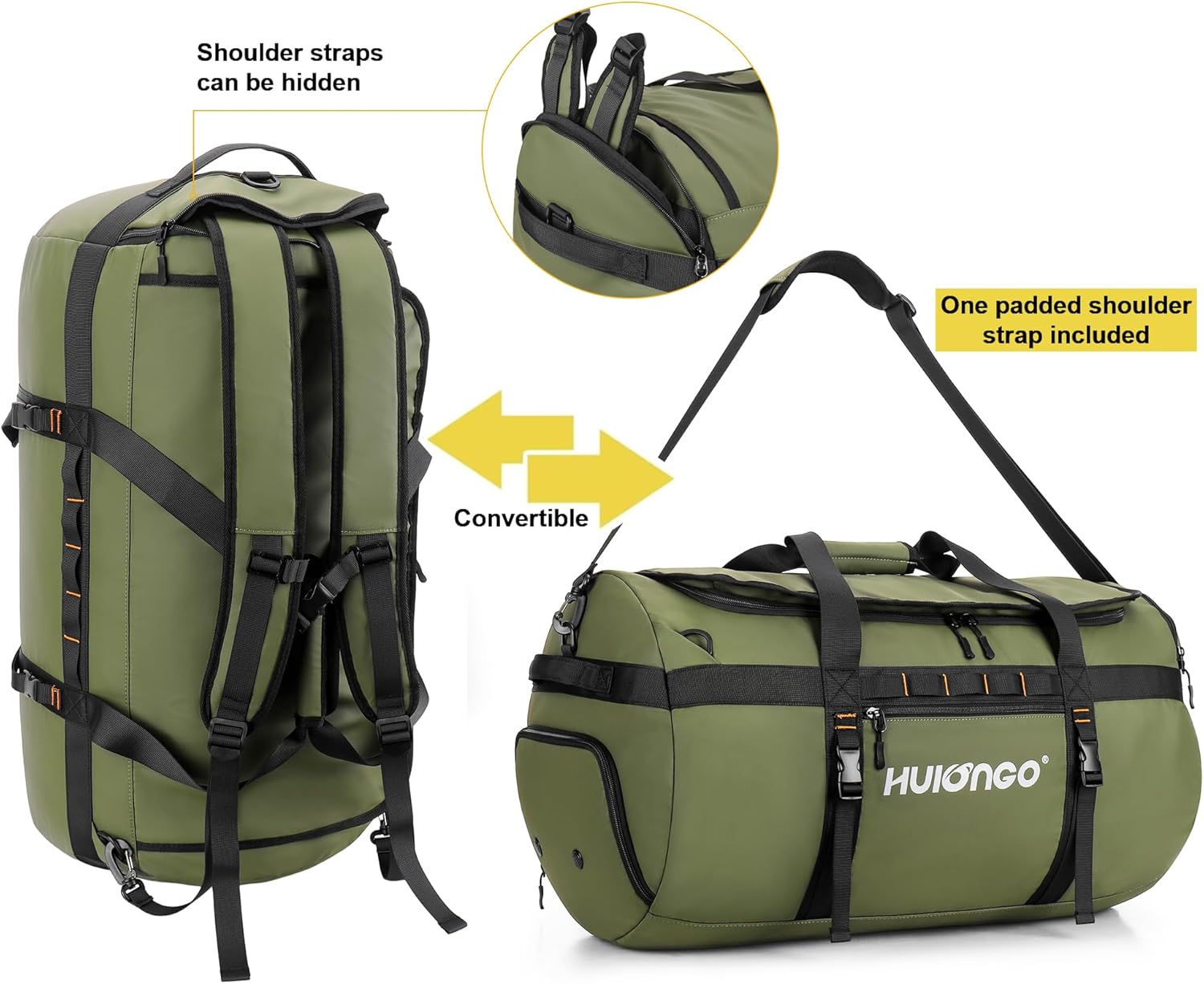
- Convertible carry – Works as a duffle or backpack, which helps on stairs, cobblestones, and hostel dorms where rolling wheels are useless.
- Packability – When empty it compresses enough to slide under a seat or into a larger suitcase, unlike rigid luggage.
- Security and maintenance – Simple closures that are easy to dry and wipe clean after beach trips; solid zippers and straps are easy to inspect and fix if frayed.

How I’d Choose Between 40L, 60L, and 90L
Three sizes, three different travel styles. I walk you through the trade-offs because choosing wrong means either wasted space or an overstuffed mess.
- 40L – For minimalist city breaks, carry-on focused trips, or if you’re disciplined about laundry. Easier on the back and usually TSA-friendly for overhead bins.
- 60L – My sweet spot. Fits multi-day kits, a pair of shoes, jacket, and camera gear without feeling like luggage. Great for mixed trips – a day of meetings followed by a weekend hike.
- 90L – For long expeditions, group sports gear, or when you’re moving between hostels for weeks. Heavier, harder to carry as a backpack, but unbeatable for volume.
How I Actually Use It Day to Day
- Pre-pack in zones – Shoes and toiletries go at the bottom; dirty laundry in a corner; fragile tech in a padded sleeve in the middle. Zones make airport pulls painless.
- Use compression – Roll clothes and use packing cubes. The 60L shrinks and stays balanced when compressed, which reduces sway when worn as a backpack.
- Strap strategy – Keep the shoulder straps tucked when checking the bag; use them when navigating stairs. The strap attachments are sturdy enough for daily shoulder carry.
- Waterproof habits – I store cables and chargers in a dry pouch near the top so they don’t get moisture from shoes or wet clothes. Simple habit, big payoff.
- Quick clean – After beach days I rinse sand and salt off the exterior and let it air-dry; the material loses less color and grime than lighter fabrics.
Mistakes I See Travelers Make With This Type of Gear
- I’ve seen people overpack the 90L and then regret the weight on long transits – remember volume isn’t always a win.
- Using a backpack duffle without compression makes it wobble, which blows out your shoulders after an hour.
- Storing wet gear loose inside – always isolate wet items in a dry bag to protect electronics and leather.
- Assuming all waterproof bags are breathable – they’re not. If you pack sweaty gear, expect some odor unless you air it out.

If You’re Hesitating, Read This
- Is it heavy? I worried the heavy-duty fabric would add weight. In practice the 60L balances durability and carry comfort; it’s heavier than ultralight packs but much lighter than a loaded suitcase.
- Will it fit overhead? Not always. I treat the 60L as a checked or gate-checked option for longer trips; the 40L is my overhead choice.
- What about comfort? The padded shoulder straps and the backpack mode make city-to-train transfers and stair climbs manageable. If you’re hiking for miles, consider a dedicated trekking pack.
- Do I really need waterproofing? For beaches, rainy seasons, or ferry rides – yes. For controlled business travel, maybe not. I choose waterproofing for flexibility.
- Is maintenance a pain? No. Wipe the exterior, air the interior after wet trips, and check seams – basic care extends life significantly.
I pack this 60L waterproof duffle bag backpack when I need real volume without the suitcase hassle. If your trips include mixed transit, rainy weather, or bulky gear, it earns a permanent spot in my kit.
Some links are affiliate. As an Amazon Associate, I earn from qualifying purchases – at no extra cost to you. It helps keep these finds coming. Thanks for your support!